
Preparing premium jewelry cases for international delivery requires more than placing each product inside a carton. The packaging needs to reduce direct surface contact, restrict movement, support the case during handling and remain practical for bulk packing, warehousing and onward distribution.
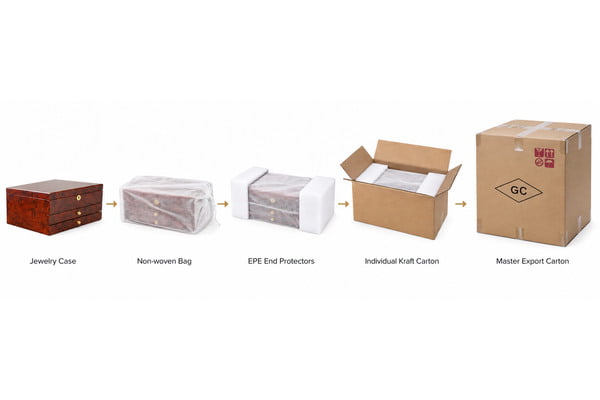
For many of Ezicase's higher-end jewelry cases and storage products, the standard export packing arrangement generally uses four layers: a spunlace non-woven bag around the product, EPE foam protectors fitted at both ends, an individual inner box and an outer master carton for bulk transport. The exact packing method may still be adjusted according to the product structure, surface finish, size and project requirements.
Buyers who are still selecting a product structure can first review the Ezicase custom jewelry case collection. Packaging should then be evaluated together with the selected case rather than treated as a separate decision made only before shipment.
Why Can't a Jewelry Box Be Its Own Shipping Protection?
A finished jewelry case is designed to store and present jewelry. Its rigid body may provide structure for normal use, but it does not automatically protect the exterior finish, hardware and movable components during bulk transportation.
Separating Product Design from Packaging Engineering
High-gloss lacquer, veneer, leather-covered surfaces and decorative hardware may respond differently to contact and pressure. Drawers, removable trays, mirrors and glass elements also introduce movement or localized pressure points that need to be considered after the product is packed.
The four packaging layers serve different purposes:
- Spunlace non-woven bag: The bag separates the exterior from rougher packaging materials and helps reduce direct rubbing and scuffing during packing and handling. It should not be described as making the product scratch-proof.
- EPE foam end protectors: Protectors fitted at both ends provide cushioning and help limit movement inside the inner box. Their shape and fit need to suit the case rather than press against fragile or protruding details.
- Individual inner box: Each packed jewelry case is placed in its own box, creating an individual handling unit and separating it from other products in the shipment.
- Master carton: Multiple individual boxes are consolidated in an outer shipping carton for bulk handling and transport. Carton size, packing quantity and gross weight should be confirmed for the order.
These layers work as a system. A strong outer carton cannot compensate for a product that moves freely inside its individual box, while excessive internal pressure may create a different risk for a delicate finish or protruding fitting.
How Does Product Structure Influence Packaging Decisions?
Packaging should be reviewed against the actual case structure. A high-gloss multi-drawer box and a leather-covered case with a removable tray may both require four packaging layers, but the detailed positioning and pressure points may differ.
Tailoring Protection for Specific Jewelry Case Designs
The following features deserve particular attention:
- High-gloss lacquer finishes: The surface-contact layer should separate the finish from the inner box and other coarse materials. The packed product should also be checked for movement that could cause repeated rubbing.
- Leather-covered cases: Cushioning should hold the case steadily without creating unnecessary localized compression on the covered surface.
- Locks, handles and decorative hardware: Protruding parts should not become the main points carrying pressure inside the package. Additional local protection can be evaluated when the structure requires it.
- Mirrors, windows and glass elements: The packaging arrangement should be checked for front pressure, edge pressure and movement from nearby components. Packaging materials should not be placed in a way that creates concentrated force on the glass.
- Drawers and removable trays: These components should be checked after the product is placed in its normal packing position. If they can move during handling, an appropriate securing method should be agreed for that structure.
- Large or multi-layer cases: Weight distribution, end protection, packing direction and units per carton need to be reviewed together.
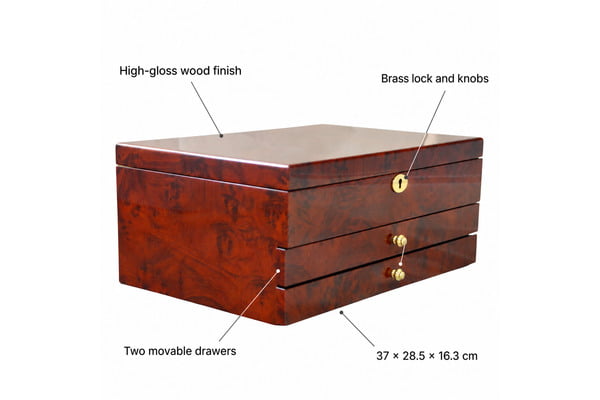
For example, the matte lacquered wooden jewelry box with multi-layer storage shown in the packaging images presents different packing considerations from a PU leather jewelry box with a removable tray. Its rigid body, two drawers and larger dimensions need to be considered when confirming the cushioning fit, packing direction and units per master carton.
Material choice also affects more than appearance. The comparison of wooden and leather jewelry boxes provides additional context for buyers who have not yet selected the main construction route.
What's the Difference Between Retail Presentation and Export Packaging?
Retail packaging and export packaging can be part of the same solution, but they do not automatically perform the same job. Retail packaging supports brand presentation and the unboxing experience. Export packaging also needs to position the product and support bulk handling.
Function Over Form: The Role of Export Packaging
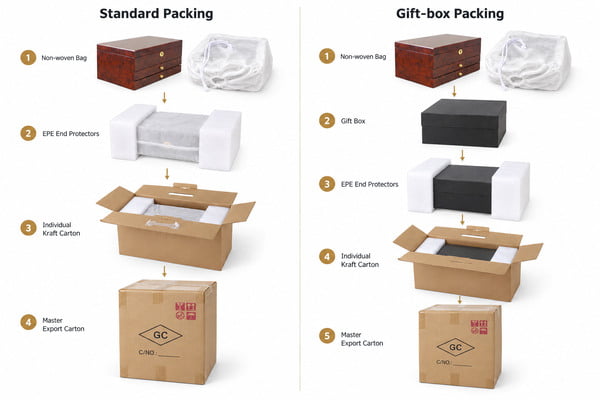
A branded gift box does not necessarily replace the normal individual shipping box. In one established Ezicase gift-box packing arrangement, the jewelry case is first placed in a spunlace non-woven bag and then inside the gift box. EPE foam protectors are fitted at both ends of the gift box before it is placed in an individual kraft carton. Multiple individually packed units are then consolidated in a master carton. This creates five packaging layers: non-woven bag, gift box, EPE foam end protectors, individual kraft carton and master carton.
The gift box adds retail presentation, while the EPE end protectors, individual kraft carton and master carton support the export packing arrangement. Other gift-box structures may still require a different solution, so the complete packed sample should be reviewed before production.
The distinction is especially important when the buyer has more than one distribution stage:
- Bulk import: Several individually packed jewelry cases are shipped together in master cartons to a warehouse or distributor.
- Retail supply: The individual package may need to remain presentable after the outer carton is opened.
- Direct-to-consumer delivery: If each case will later be sent separately by parcel, the buyer should assess whether additional parcel packaging is needed for that next journey.
The manufacturer's bulk export carton should not automatically be treated as the final parcel solution for an individual consumer order. Buyers should explain the intended sales and distribution route while the packaging is being confirmed.
How Do Packaging Choices Impact Logistics and Costs?
Packaging dimensions, units per carton and gross weight influence freight calculation, handling and warehouse planning. The most compact arrangement is not necessarily the most suitable if it does not provide adequate positioning and cushioning.
Connecting Packaging Design to Your Bottom Line
Buyers should review several connected factors:
- Individual box dimensions: Unnecessary empty space can increase total shipment volume, but reducing the box too far may leave insufficient room for the bag and EPE foam end protectors.
- Units per master carton: More units may improve space use, but the resulting carton must remain practical for handling and must not place unsuitable pressure on the individual boxes.
- Gross weight: Carton quantity and product weight should be calculated together, particularly for larger multi-layer jewelry cases.
- Mixed models: If several sizes or models are packed in one shipment, carton identification and packing records become more important.
- Warehouse and distribution needs: Uniform cartons can simplify stacking and counting, while clear product codes and carton marks help the buyer identify contents after arrival.
- Presentation requirements: Custom gift boxes, printed inner boxes, labels and barcodes can add value for retail programs, but they may also change package dimensions, unit cost and preparation time.
The appropriate balance depends on the product value, structure, order quantity and delivery route. Packaging should therefore be discussed while the product and quotation are being finalized, not added as an undefined requirement after production.
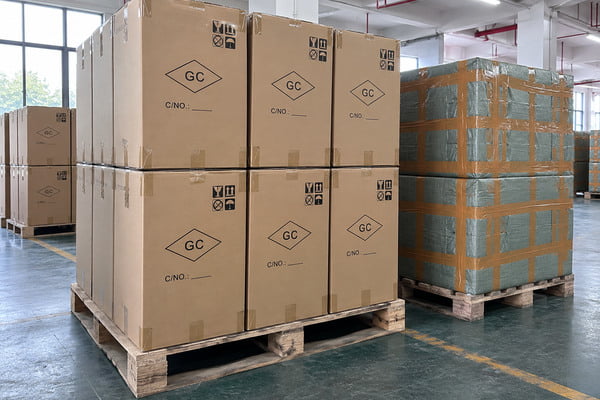
For some shipments, an outer woven bag may also be added around the master carton according to the transport arrangement and handling requirements. This is an additional shipment-level measure rather than part of the standard four-layer individual packing or five-layer gift-box packing sequence.
Why Is Packaging Approval Crucial Before Mass Production?
Packaging approval establishes how the finished jewelry case will be protected, identified and packed. It helps the buyer and manufacturer confirm the same arrangement before the full order is prepared. Packaging verification is one part of the wider pre-shipment review. The jewelry box quality control checklist also covers exterior finish, interior workmanship, hardware, dimensions, branding, defect classification and inspection records for bulk orders.
The Importance of Pre-Production Packaging Verification
The approval should cover the details that materially affect protection and logistics:
- the spunlace non-woven bag or other agreed surface-contact layer;
- the fit and position of the EPE foam end protectors;
- the direction in which the product is placed in the individual box;
- the position of drawers, trays and other movable components;
- the individual inner-box structure and dimensions;
- the master-carton dimensions and units per carton;
- the expected gross weight;
- product codes, carton marks, labels and barcodes where required;
- any retail-presentation requirements;
- any project-specific packing test requested by the buyer.
Packaging details may be confirmed through a physical sample, packing photographs, agreed specifications or a project checklist, depending on the product and buyer requirements. They do not need to follow one identical documentation process for every order.
If a drop test is required, the packed product, test method and acceptance criteria should be agreed in advance. A test can help assess an agreed packaging arrangement, but it should not be presented as a guarantee against every condition that may occur during transportation.
Packaging should also be checked during the product-sample stage whenever possible. The guide on reviewing a custom jewelry box sample before mass production explains how buyers can record approved materials, functions, branding and packaging before bulk production begins.
Frequently Asked Questions
Can a standard retail gift box protect jewelry cases for international shipping?
Not automatically. A retail gift box supports presentation, but it does not necessarily replace the individual kraft carton used for shipping. In an established Ezicase gift-box arrangement, the packed sequence is a spunlace non-woven bag, gift box, EPE foam end protectors, individual kraft carton and master carton. The final arrangement should still be confirmed for the selected product.
Do all Ezicase jewelry cases use the same export packaging method?
No. Many higher-end products generally use a spunlace non-woven bag, EPE foam protectors at both ends, an individual inner box and a master carton. The detailed fit, packing direction, units per carton and any additional protection may change with the product structure and project requirements.
What kind of testing is done for packaging jewelry boxes before shipping?
Routine inspection should confirm that the agreed materials and packing arrangement have been applied correctly. A drop test can be arranged when required by the project, with the method and acceptance criteria agreed in advance. Other testing requirements should be discussed separately rather than assumed to apply to every order.
Why is individual product wrapping important for luxury jewelry cases?
The spunlace non-woven bag creates a soft contact layer between the jewelry case and the surrounding packaging. It helps reduce direct rubbing, scuffing and contact with rougher materials during packing and handling, but it should not be treated as a guarantee against all surface damage.
How do we specify packaging for customized jewelry box orders?
Share the product structure, surface finish, order quantity, destination market and intended distribution method. Then confirm the surface-contact layer, end protection, individual box, master carton, units per carton, labels and any retail or testing requirements. Buyers developing a new product can also review Ezicase customization options before sampling.
Conclusion
Reliable jewelry box shipping packaging depends on how the protective layers work together. For many higher-end Ezicase products, the four-layer arrangement of a spunlace non-woven bag, EPE foam end protectors, an individual inner box and a master carton provides the starting point. The final method still needs to reflect the product's finish, hardware, movable components, size and distribution route.
Buyers should confirm packaging while approving the product rather than waiting until mass production is complete. Share your target jewelry case, order quantity, destination market and distribution method to discuss a project-specific product and packing arrangement with Ezicase.
