
What Is a Watch Winder and How Does It Work?
For many luxury watch owners, the thought of their exquisite timepiece stopping can be frustrating. This often leads to considering a watch winder, but a common worry surfaces: are watch winders truly safe for these intricate mechanical marvels, or could they cause harm? It's a question I often hear from clients, and it's essential to address these concerns head-on.
Watch winders can be safe for luxury automatic watches when chosen carefully and used correctly. Their safety hinges on several factors, including the winder's quality, its anti-magnetic protection, multiple preset Turns Per Day (TPD) and rotation settings that accommodate the requirements of most automatic watch movements, and proper maintenance. A well-designed watch winder simulates natural wrist movement, keeping your watch lubricated and ready to wear without excessive wear.

The world of luxury watch care is filled with passion and precision. Understanding the nuancehttps://ezicase.com/wp-content/uploads/2026/07/Goochy-watch-winder-are-watch-winders-safe-for-Luxury-Automatic-watches?.pngs of watch winder safety is paramount to preserving your cherished collection. Let's delve deeper into how these devices function, what potential risks exist, and how you can make an informed choice to protect your investment.
Do Quality Watch Winders Protect My Investment?
It's natural to wonder if putting your precious timepiece into a rotating device will truly protect it. Many collectors express this initial skepticism. So, how do quality watch winders contribute to the longevity and readiness of your automatic watches?
Yes, quality watch winders are designed to protect your investment by keeping the watch's intricate mechanical movement consistently lubricated and accurate. They prevent the mainspring from fully unwinding, which can reduce the need for frequent setting and minimize wear on the winding stem and crown over time.

Keeping Your Watch Running Smoothly
At its core, an automatic watch is a miniature, complex machine, and like any machine, it requires consistent operation to perform optimally.
When an automatic watch sits motionless for extended periods, the lubricants within its movement can begin to settle or thicken. While this process is slow, over many months or years, it can lead to increased friction when the watch is eventually restarted, potentially accelerating wear on delicate components.
A high-quality watch winder simulates the natural motion of being worn on the wrist, gently rotating the watch to keep the mainspring tensioned and the internal gears in motion. This continuous, low-stress activity ensures that the fine lubricants remain evenly distributed throughout the movement, preventing them from solidifying and maintaining optimal friction levels.
For manufacturers like Goochy, precision engineering in our watch winder mechanisms is crucial for this very reason. We focus on motors that provide smooth, consistent rotation without jarring movements. This means when you pick up your watch, it's not only showing the correct time and date, but its internal mechanisms have also been cared for, contributing to its overall health and lifespan.
What Risks Should I Be Aware Of When Using Watch Winders?
Despite their benefits, it's important to acknowledge that not all watch winders are created equal, and improper use can introduce potential risks.
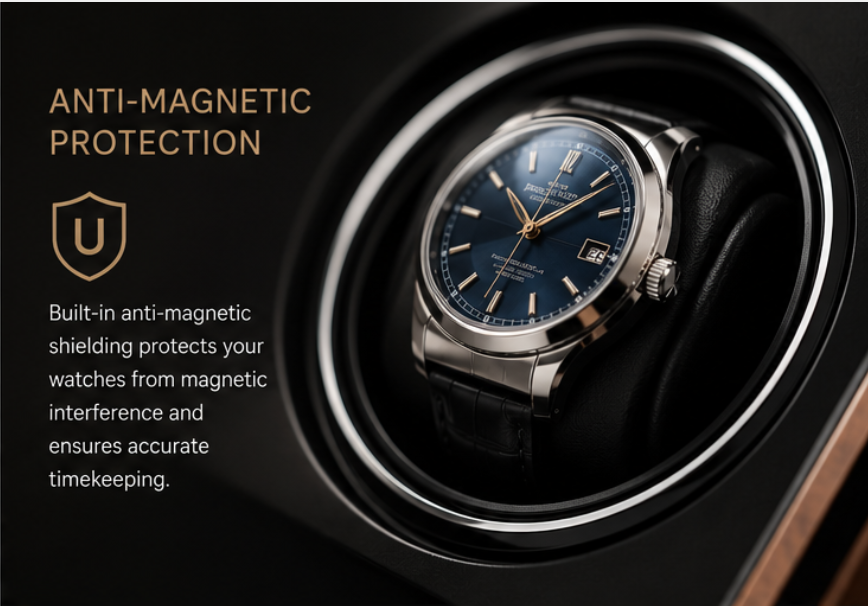
The main risks associated with watch winders include magnetic interference from poorly shielded motors, excessive wear due to incorrect Turns Per Day (TPD) or rotation settings, and the potential for premature lubrication degradation if a winder runs a watch continuously for too long without breaks, especially if it's a low-quality unit.
Navigating Potential Pitfalls
One of the most frequently discussed risks is magnetic interference. Automatic watches, especially older models, can be susceptible to magnetism, which can negatively impact timekeeping accuracy.
The motors in watch winders generate magnetic fields. If a winder uses a cheap, unshielded motor, it could potentially magnetize your watch's delicate components, leading to erratic timekeeping.
This is why, as a manufacturer, we prioritize robust anti-magnetic shielding in our products. We ensure that our watch winders are designed to keep any magnetic fields from affecting the watch.
Another concern is overwinding or excessive wear. While modern automatic watches have slip clutches to prevent overwinding of the mainspring, continuous rotation without purpose can theoretically lead to unnecessary wear on the rotor bearings.
However, the more significant issue is often choosing the wrong Turns Per Day (TPD) settings.
Different watch movements require specific TPD values and rotation directions (clockwise, counter-clockwise, or bi-directional). Running a watch with incorrect settings might not effectively wind it or, conversely, keep it running far more than necessary, potentially leading to increased friction.
High-quality watch winders offer multiple preset TPD and directional settings that cover the requirements of most automatic watch movements. Many reputable manufacturers also provide compatibility guides to help users select the appropriate program.
These professionally optimized preset programs allow the winder to emulate ideal wearing conditions for most luxury watches while avoiding unnecessary stress on the movement.
How Can I Choose a Safe Watch Winder for My Automatic Watches?
Given the nuances of watch winder safety, making the right choice can feel overwhelming.
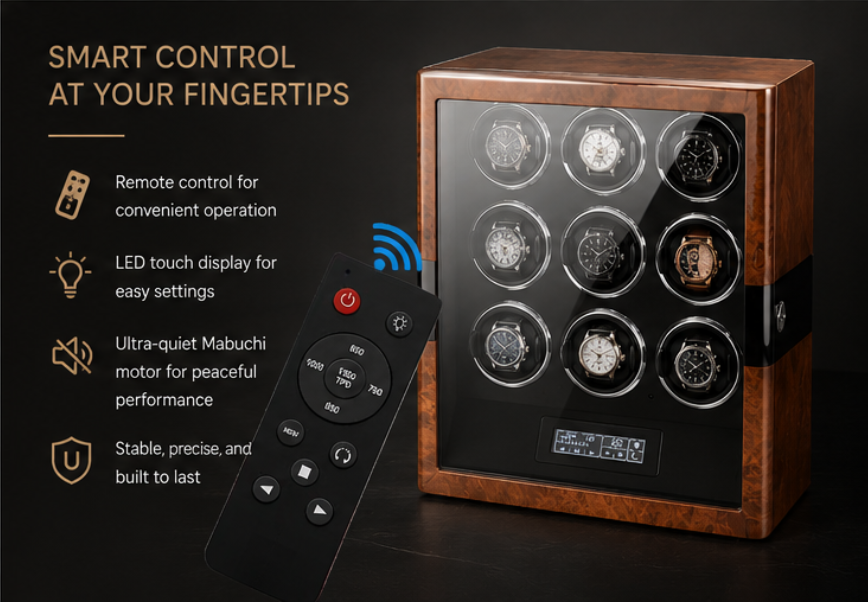
To choose a safe watch winder for your automatic watches, prioritize models with selectable preset Turns Per Day (TPD) programs and rotation direction settings that are compatible with your watch's movement. Look for winders featuring anti-magnetic shielding, quiet and reliable motors, and a reputation for quality craftsmanship.
Making the Right Selection
When evaluating watch winders, the first and most critical step is to match the winder's capabilities with your specific automatic watch.
Each watch movement has a recommended TPD and a preferred rotation direction:
- Clockwise (CW)
- Counter-Clockwise (CCW)
- Bi-Directional
Many reputable winder manufacturers provide compatibility guides to help you find these settings for your watch model.
Choosing a winder that offers multiple preset winding programs, rather than a single fixed rotation pattern, is crucial for preventing both under-winding and unnecessary wear.
Beyond functionality, focus on the quality of construction, including:
- Quiet and reliable motors
- Anti-magnetic protection
- Durable craftsmanship
- Soft, non-abrasive interiors
- Stable watch holders and base
Ask about certifications such as:
- CE
- UL
- FCC
At Goochy, we understand the importance of these details, which is why we invest in high-grade components and rigorous testing.
Additionally, timed interval programs—for example, rotating for several minutes and then resting—better simulate natural wear patterns and avoid unnecessary continuous operation.
Investing in a well-researched, high-quality watch winder is ultimately an investment in the long-term health and precision of your luxury timepiece.
Frequently Asked Questions
Do Watch Winders Damage Lubricants?
While some debate exists, quality watch winders are generally not believed to damage lubricants. By keeping the watch moving, they help distribute lubricants evenly, preventing them from congealing.
Damage is more likely from low-quality winders running watches excessively without proper rest intervals, or from watches that are due for servicing regardless of winder use.
How Often Should I Use My Watch Winder?
You should use your watch winder as needed to keep your automatic watch running, typically when you're not wearing it for more than a day or two.
Most owners use them to keep the watch accurate and ready to wear.
Can Any Automatic Watch Go in a Winder?
Almost all automatic watches can be placed in a winder, but it's crucial to match the winder's settings to your watch's specific movement.
Each movement has a recommended number of Turns Per Day (TPD) and direction.
Always consult your watch's manual or a winder manufacturer's compatibility guide to select the appropriate preset program.
Conclusion
The question of whether watch winders are safe for luxury watches isn't a simple yes or no.
When you invest in a high-quality winder with professionally optimized preset TPD programs, robust anti-magnetic protection, and reliable components, you're choosing a device that can actively contribute to the longevity and precision of your automatic timepieces.
My experience, both personally and through countless discussions with collectors, confirms that a well-chosen watch winder is a valuable tool for preserving the functionality and value of these intricate machines.
At Goochy, we specialize in crafting luxury storage solutions that meet these exacting standards, ensuring your cherished collections are always cared for.
Our watch winders feature professionally optimized preset TPD programs and bi-directional rotation modes, providing reliable winding solutions for most automatic watch movements.
If you're considering enhancing your watch care, reach out to us for solutions that blend meticulous craftsmanship with innovative protection.
