Watch winder noise may come from normal motor and transmission operation, vibration transferred through the supporting surface, contact between the watch and the cabinet, or a change in an internal component. A steady low-level operating sound is not automatically a fault, while a new grinding, scraping, clicking, or strong vibration deserves attention.
The sound alone cannot provide a complete diagnosis. The safest approach is to compare the unit with its usual operation, check placement and watch fit, document what happens, and contact the supplier when the cause remains unclear.
Normal Operating Sound and Warning Signs
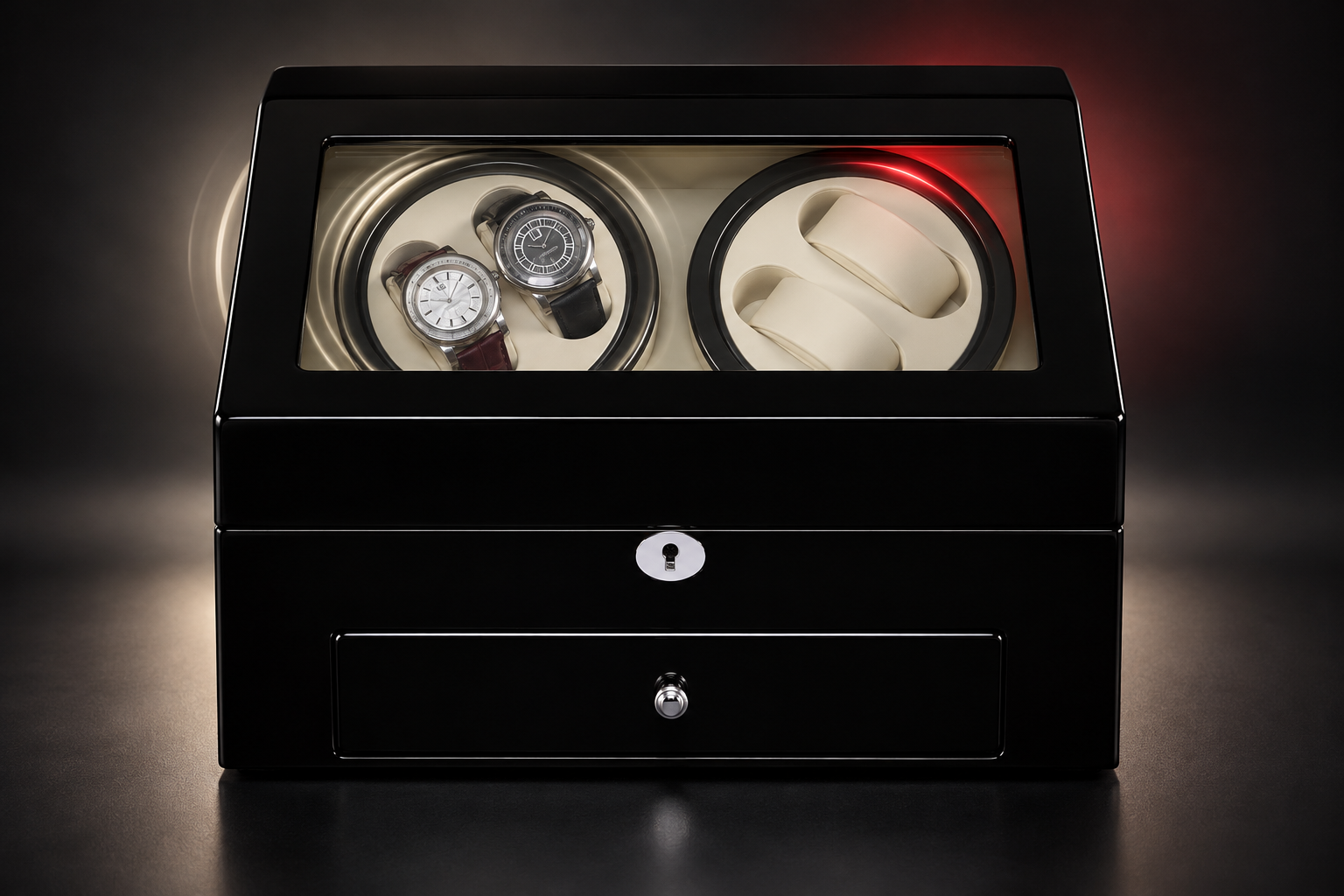
A watch winder contains a motor, a transmission system, and one or more rotating modules. These moving components can produce a faint hum or consistent mechanical sound during an active cycle. How noticeable that sound seems depends on the room, listening distance, number of active modules, supporting surface, load, and product condition.
Pay closer attention when the sound is new, louder than usual, irregular, or accompanied by visible vibration. Potential warning signs include:
- Grinding or scraping: May indicate unwanted contact or friction and should not be ignored.
- Repeated clicking: May come from a buckle, strap, holder, or another part making contact during each rotation.
- Rattling: May result from an unstable surface, a loose watch fit, or vibration within the cabinet.
- A sudden increase in volume: Indicates that the operating condition has changed and warrants investigation.
- Strong vibration or visible rubbing: Is a reason to stop the unit and contact the seller or supplier.
These observations are useful indicators, not definitive technical diagnoses. Avoid identifying a failed motor, bearing, gear, or belt unless the product has been inspected by a qualified technician.
Common Factors That Affect Watch Winder Noise
Motor and Transmission
The motor drives the winding module through gears, belts, shafts, or another transmission arrangement, depending on the model. Motor quality can influence operating feel and consistency, but low-noise performance depends on the complete system, including installation, transmission, cabinet construction, load, and condition over time. A motor brand alone does not guarantee silent operation.
Cabinet and Installation
The cabinet can transmit or reduce vibration depending on its structure, joints, component fit, and installation. A loose panel or fitting may create secondary noise. Exact materials should be verified from the product record rather than inferred from appearance.
Supporting Surface and Room
A hollow shelf, lightweight table, or uneven surface may amplify vibration. The same winder may sound different on a stable cabinet or solid counter. Hard, quiet rooms can also make a modest operating sound more noticeable, especially at night when background noise falls.
Watch, Holder, and Clearance
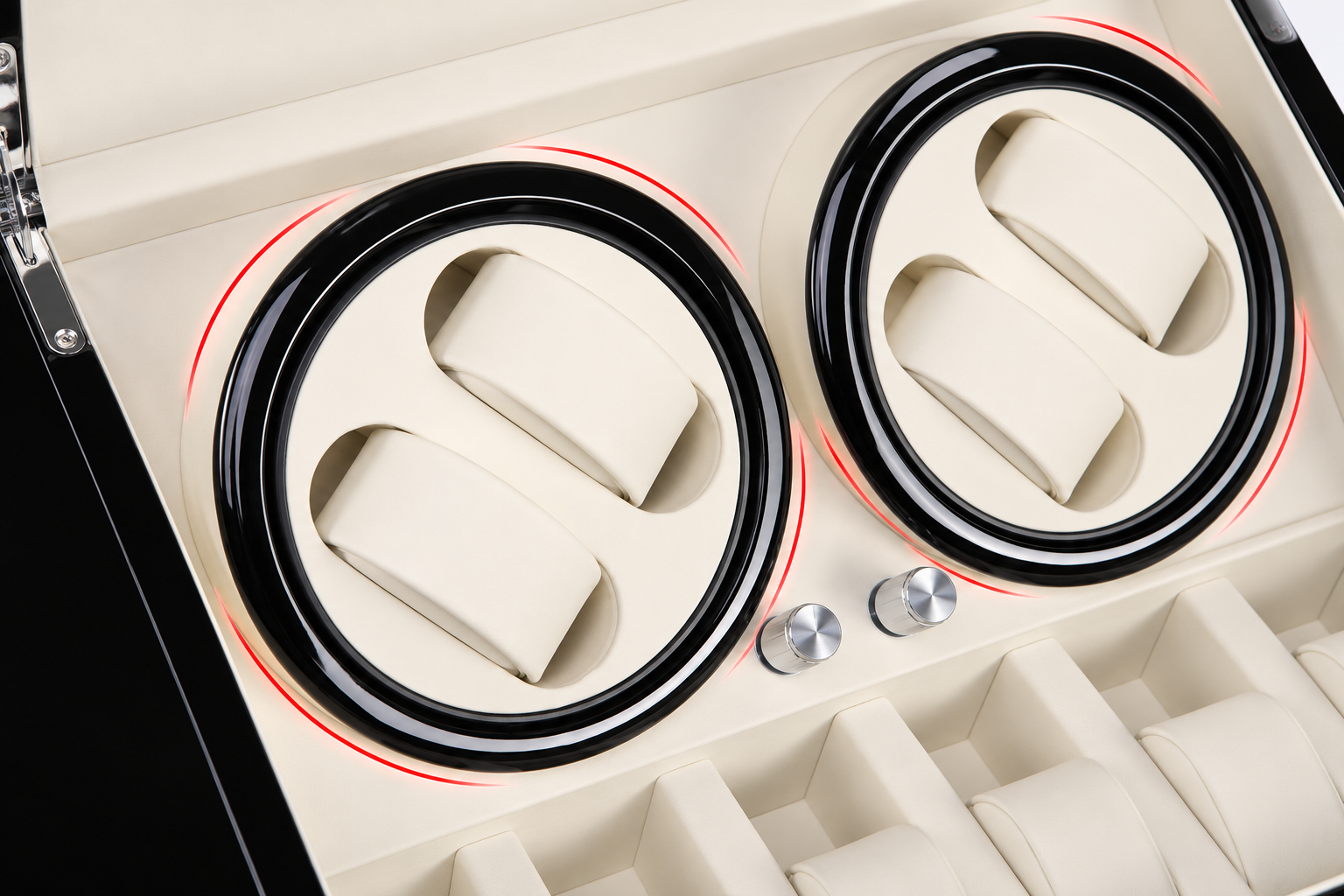
A watch that is not secured correctly may shift during rotation. A protruding clasp, loose bracelet, large case, or incorrectly seated holder can touch the surrounding lining, module, door, or viewing window. This often creates a rhythmic sound that follows the rotation.
Safe Checks for a Noisy Watch Winder
Start with non-invasive checks. Do not open the casing, apply lubricant, force the winding module by hand, or attempt an electrical repair.
- Stop the unit and check the surface. Place it on a stable, level support. If the sound changes, surface resonance or instability may be contributing.
- Check the watch and holder. Make sure the watch is secure, the holder is fully seated, and the clasp or bracelet is not protruding.
- Inspect visible clearance. Look for contact between the watch, holder, surrounding module, lining, door, or window. Do not force the mechanism.
- Follow the product instructions. If the manual permits operation without the watch or holder, compare the sound under the stated conditions.
- Observe the operating pattern. Note whether the sound occurs in clockwise, counterclockwise, or bidirectional operation, on one module, or only under a particular load.
- Record the issue. A short video can show the product position, active module, watch fit, and sound more clearly than a written description alone.
If you notice smoke, a burning smell, strong vibration, visible rubbing, damaged wiring, or another alarming condition, stop use and disconnect the power when it is safe to do so. Contact the supplier for guidance.
Information to Send the Supplier
Clear information helps the supplier distinguish a placement issue from a watch-fit problem or a possible product fault. Provide:
- Product model or order reference
- When the sound began and whether it changed suddenly
- A description such as humming, clicking, scraping, grinding, or rattling
- The affected module, direction, or operating program
- Whether the result changes after checking the surface and watch fit
- A short video showing the setup and sound
A recording can support an initial assessment, but it should not be treated as a guaranteed remote diagnosis.
Why a Watch Winder May Sound Louder at Night
The winder may not have changed at all. During the day, conversation, traffic, air conditioning, and other background sounds can mask a low operating hum. In a quiet bedroom or office at night, the same sound may become more noticeable.
Room acoustics and furniture also matter. Hard walls and floors reflect sound, while soft furnishings absorb more of it. Even so, do not assume the environment is the only cause if the sound has changed. Compare the unit with its established operating pattern and complete the basic checks above.
How B2B Buyers Should Evaluate Watch Winder Noise
For watch brands, retailers, distributors, and private-label buyers, noise is both a product-performance issue and a customer-experience issue. Sample evaluation should therefore use consistent conditions rather than casual impressions from different rooms or surfaces.
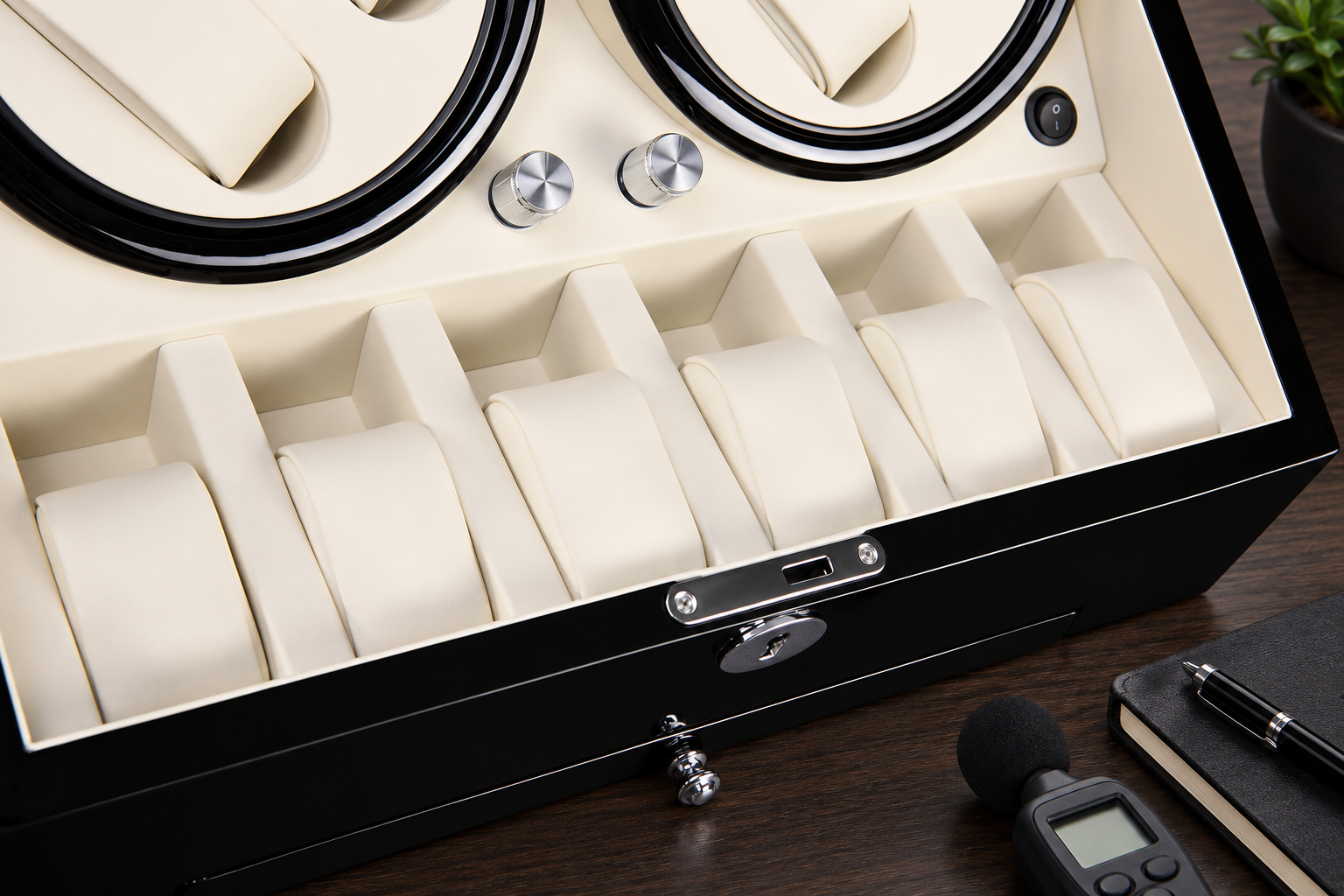
Use a Repeatable Comparison
Test comparison samples in the same room, on the same stable surface, at the same listening position, and with representative watches. Record the active modules, operating program, direction, load, and background conditions.
Keep an Approved Reference Sample
An approved sample can serve as a practical reference for operating sound, vibration, fit, controls, and finish. It helps align the buyer, quality team, and manufacturer when production units are reviewed.
Define Measurable Requirements Correctly
If a project requires a numerical noise limit, the number alone is insufficient. Buyer and supplier should agree on the measurement distance, equipment, background noise, room conditions, surface, load, number of active modules, operating mode, and acceptance method. Noise figures should only be published when the test conditions and model are verified.
Read our B2B guide to evaluating watch winders for additional product and supplier checks.
Planning a Low-Noise Watch Winder Project
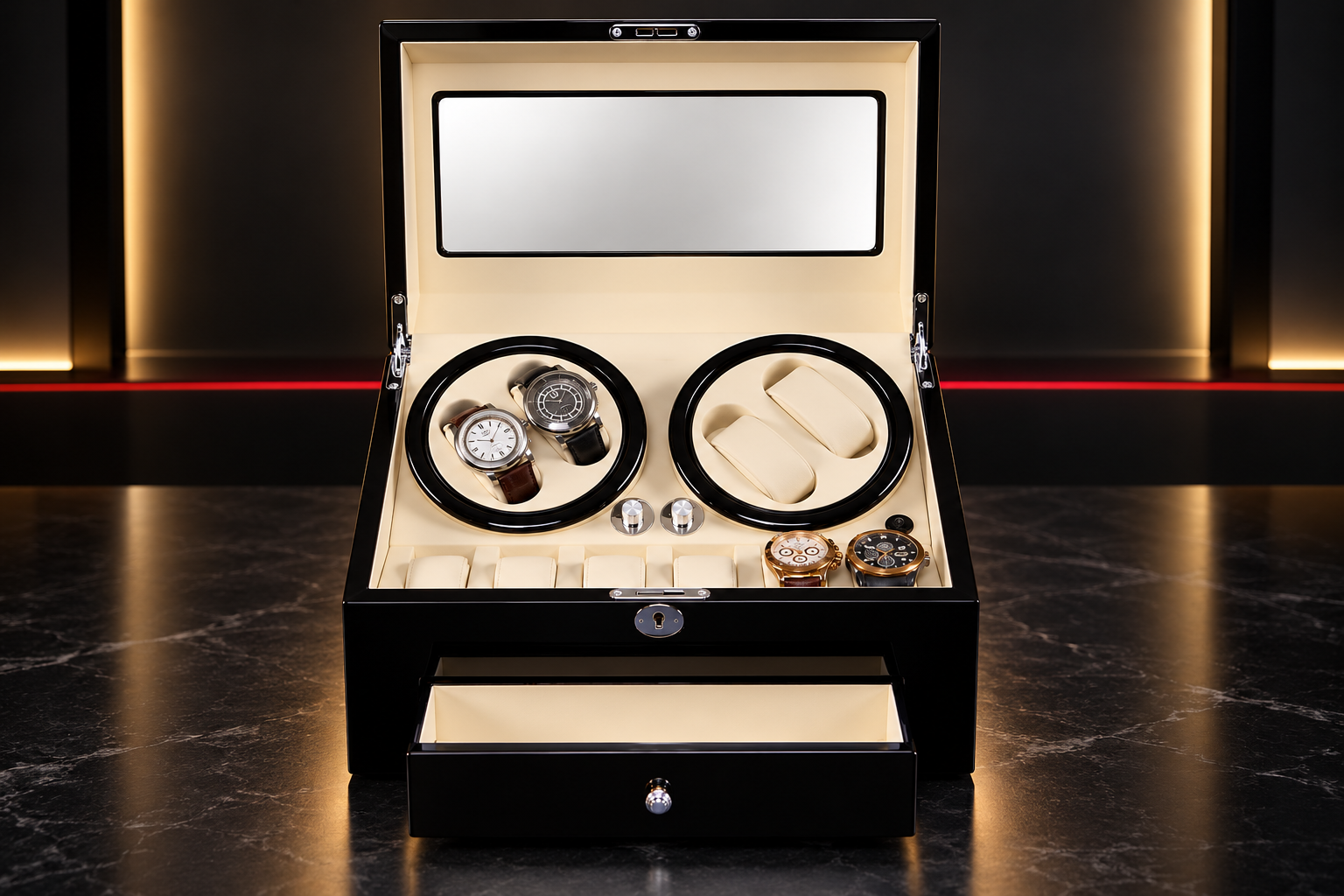
A low-noise target should be considered together with capacity, controls, watch-holder fit, cabinet construction, finish, power configuration, and intended placement. For buyers who need a product available for faster evaluation, this ready-stock 4-watch winder with 6 storage slots provides a relevant sample configuration. More winding positions and different cabinet formats may create different operating conditions, so performance should be confirmed for the selected model rather than generalized across a complete range.
For an OEM or private-label project, include the intended market, usage environment, representative watch size and weight, required functions, and acceptance method in the development brief. Evaluate a sample before confirming the production standard.
Explore the Ezicase watch winder range or review ready-stock options. Availability and exact specifications depend on the selected model and current inventory.
A Practical Conclusion
A consistent, low-level operating sound can be normal for a powered mechanical product. A sudden change, grinding, scraping, repeated contact, or strong vibration should be investigated. Begin with the surface, watch fit, holder position, and visible clearance. Document the conditions and contact the supplier rather than opening the casing or attempting an internal repair.
For B2B buyers, the most reliable approach is to compare samples under controlled conditions, retain an approved reference, and define any numerical requirement with a complete test method. Ezicase by GOOCHY supports brands, retailers, distributors, and project buyers with watch winder sourcing and OEM/ODM development. Contact us to discuss the intended configuration and evaluation requirements for your market.