
Can a Watch Winder Overwind an Automatic Watch? The Truth About Watch Winder Safety
Many automatic watch owners ask the same question before buying a watch winder:
> Can a watch winder overwind my automatic watch and damage the movement?
It is a reasonable concern, especially for collectors who own valuable mechanical watches or luxury timepieces with complex movements.
The good news is that most modern automatic watches are designed with built-in protection against traditional overwinding. When paired with a properly configured watch winder, they can usually be kept running safely without placing excessive tension on the mainspring.
However, this does not mean that every watch winder is suitable for every watch. Choosing the correct Turns Per Day (TPD), rotation direction, and a well-designed watch winder still plays an important role in maintaining reliable performance.
In this guide, we'll explain:
- How automatic watches wind themselves
- Why modern automatic watches are generally protected from overwinding
- Whether poor-quality watch winders can create other issues
- How to choose the correct watch winder settings
- Best practices for safely storing automatic watches
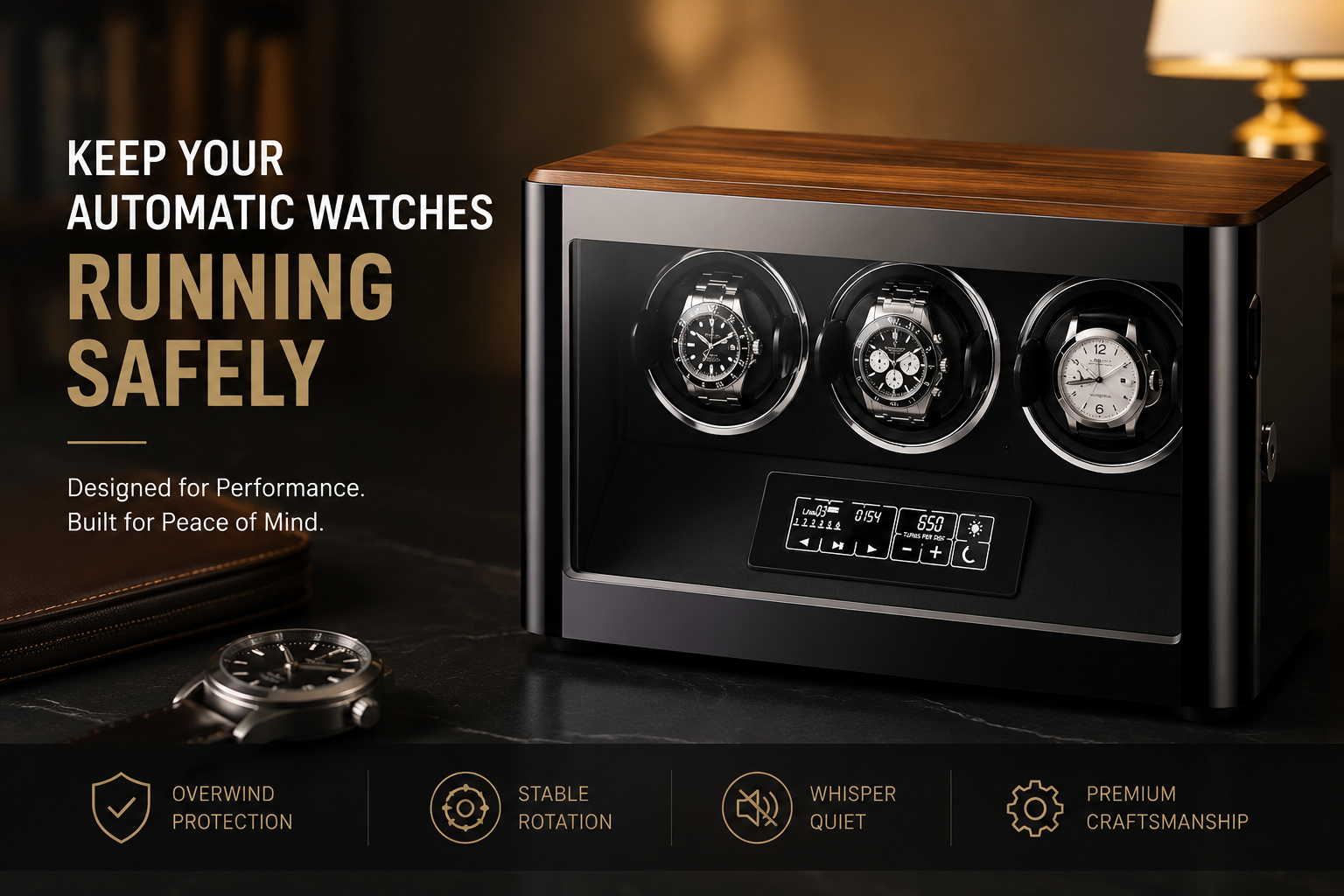
Quick Answer: Can a Watch Winder Overwind an Automatic Watch?
In most cases, no.
Modern automatic watches are generally equipped with a slipping mainspring mechanism that prevents excessive tension once the mainspring reaches its designed winding level.
Instead of continuously tightening the mainspring, the slipping mechanism allows excess winding energy to be released under normal operating conditions.
A properly designed watch winder simply simulates the natural motion of wearing the watch. When configured with the correct TPD and rotation direction, it is intended to maintain the watch's power reserve rather than "force" additional winding.
That said, choosing a quality watch winder and using appropriate settings remains important for achieving the best performance.
How Does an Automatic Watch Self-Wind?
An automatic mechanical watch stores energy inside its mainspring.
Unlike a quartz watch that relies on a battery, an automatic watch generates power through the movement of the wearer's wrist.
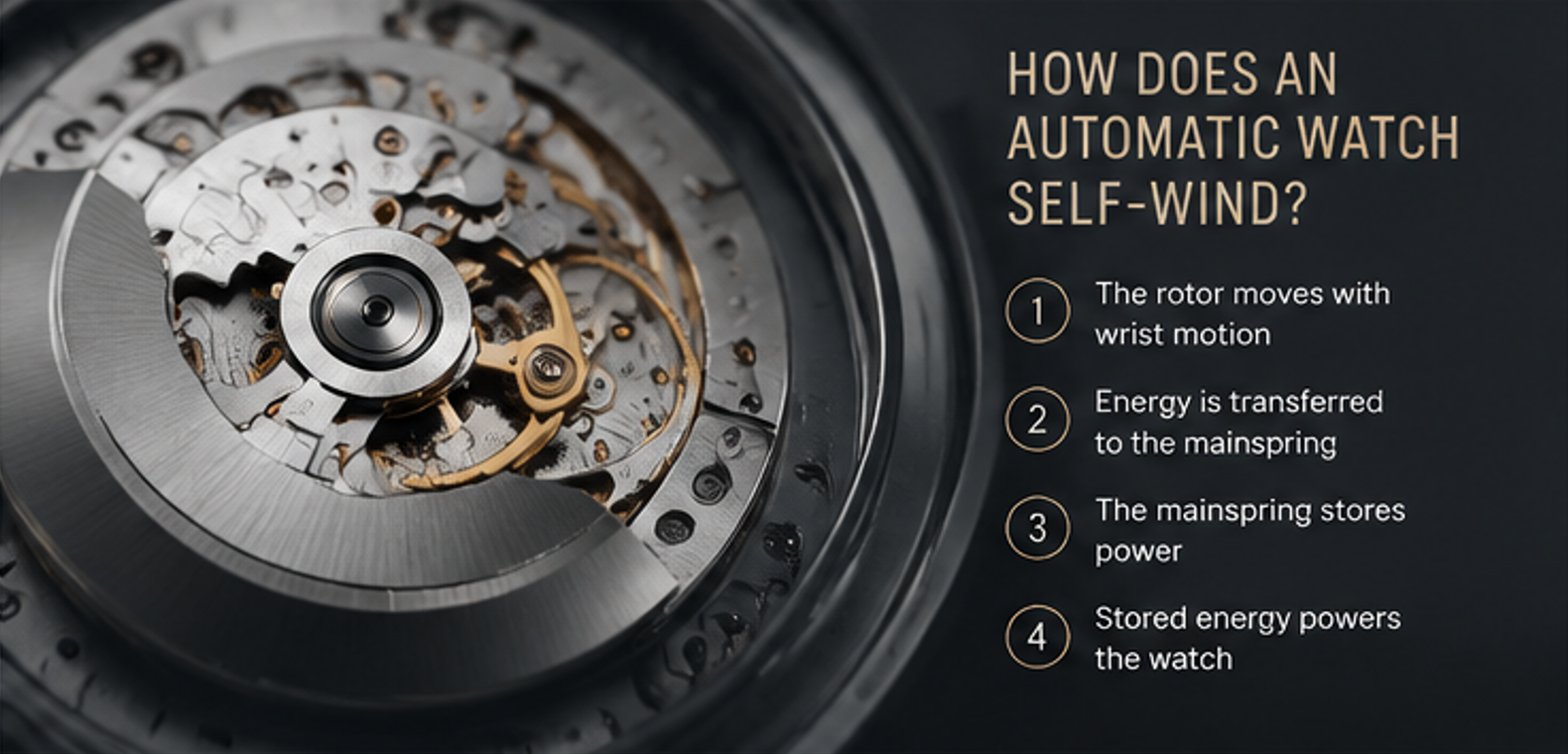
As the watch moves during daily wear:
- The internal rotor rotates.
- The rotor transfers energy through the winding system.
- The mainspring stores that energy.
- The stored energy powers the watch movement.
When the watch is removed, a watch winder reproduces this natural wrist motion by rotating the watch at controlled intervals, helping maintain the movement's power reserve while it is not being worn.
Why Watch Winders Exist
A watch winder is designed for convenience, not to increase the amount of winding beyond what a movement is designed to accept.
For collectors who own several automatic watches, a watch winder can help keep selected watches ready to wear, reducing the need to reset:
- Time
- Date
- Moon phase
- Annual calendar
- Perpetual calendar
- Other complex complications
This is particularly valuable for collectors who rotate between multiple watches throughout the week.
The Engineering Behind Automatic Winding
Inside every automatic movement is a carefully engineered winding system.
The rotor acts as an oscillating weight that responds to wrist movement. As it turns, gears transfer that motion to the mainspring, gradually storing energy inside the barrel.
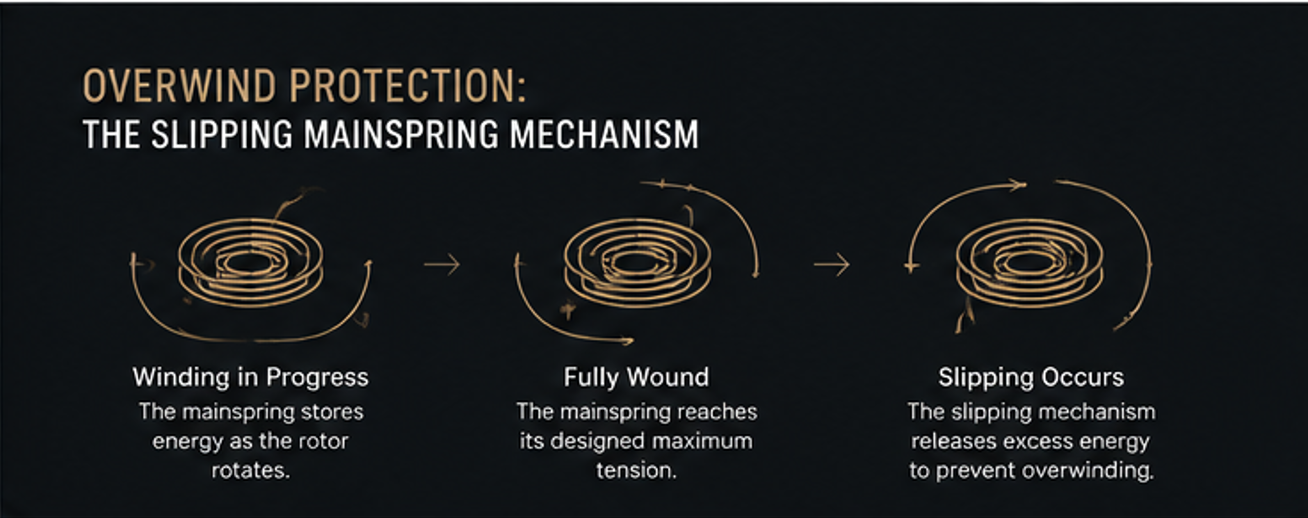
Once the mainspring reaches its designed winding level, most modern automatic movements use a slipping mainspring mechanism. Instead of continuing to increase tension, the outer end of the mainspring slips in a controlled manner inside the barrel.
This engineering solution allows the movement to continue receiving winding energy from normal wrist motion—or from a properly configured watch winder—without continually increasing spring tension.
For this reason, modern automatic watches are generally protected from the type of overwinding that affected some older manually wound watches.
How Does Overwinding Protection Work in Automatic Watches?
The concern about overwinding usually comes from the idea that continuous movement will keep tightening the mainspring until the watch is damaged.
This concern is understandable, but it does not fully reflect how modern automatic movements are designed.
Most modern automatic watches include a protection system that allows the movement to receive winding energy without continuously increasing mainspring tension after reaching full wind.
The Role of the Slipping Mainspring Mechanism
The mainspring is the component responsible for storing energy inside a mechanical watch.
During normal operation:
- The rotor transfers energy into the mainspring.
- The mainspring gradually stores power.
- The stored energy drives the movement.
When the mainspring reaches its intended tension level, many modern automatic movements use a slipping mechanism.
This allows the mainspring to release additional winding energy in a controlled way instead of continuing to build excessive tension.
Do All Automatic Watches Have the Same Overwinding Protection?
Not every mechanical movement is identical.
Different movements may use different technical solutions depending on:
- Movement design
- Caliber architecture
- Manufacturing period
- Brand specifications
Therefore, it is always better to understand the specific movement inside the watch rather than relying only on the brand name.
For modern automatic watches from established manufacturers, traditional overwinding caused by normal use of a properly configured watch winder is generally not considered a primary concern.
Can a Watch Winder Damage an Automatic Watch?
Although overwinding is usually not the main concern, a watch winder should still be selected and used correctly.
A quality watch winder should provide:
- Suitable TPD settings
- Correct rotation direction
- Stable motor performance
- Proper operating cycles
The purpose of a watch winder is to maintain the watch's power reserve efficiently, not to rotate continuously without consideration of the movement requirements.
How to Use a Watch Winder Correctly
Using a watch winder correctly involves selecting settings that match the requirements of the automatic movement.
The most important factors include:
1. Choose the Correct TPD Setting
TPD stands for Turns Per Day and refers to the approximate number of rotation cycles completed within 24 hours.
There is no universal TPD setting that works for every automatic watch.
Different movements may require different winding conditions depending on:
- Rotor efficiency
- Movement design
- Power reserve
- Winding mechanism
A higher TPD setting does not always mean better performance.
The correct goal is to provide the appropriate winding activity required by the specific movement.
For a detailed explanation of TPD ranges, winding direction, and how many turns per day different automatic watches need, read our complete guide:
How Many Turns Per Day Does an Automatic Watch Need? A Complete Watch Winder TPD Guide
2. Select the Correct Rotation Direction
Besides TPD, rotation direction is another important factor.
Automatic movements may require:
Clockwise Rotation
Some movements are designed to gain winding energy through clockwise rotation.
Counter-Clockwise Rotation
Some movements require counter-clockwise rotation for effective winding.
Bi-Directional Rotation
Many modern automatic movements can wind in both directions.
A professional watch winder should provide multiple rotation options to support different automatic movements.
> The correct combination of TPD and rotation direction helps ensure efficient winding performance.
What Are the Real Risks of a Poor-Quality Watch Winder?
The main concern with a low-quality watch winder is usually not traditional overwinding.
Instead, the more practical concerns are related to product design and performance.
Important factors include:
- Motor quality
- Vibration control
- Noise level
- Electromagnetic performance
- Accuracy of control settings
Motor Quality and Stability
A watch winder operates for long periods, which makes motor quality important.
A reliable watch winder should provide:
- Smooth rotation
- Stable operation
- Low noise performance
A poorly designed motor system may reduce user experience and affect long-term reliability.
Electromagnetic Performance
Because watch winders contain motors and electronic components, electromagnetic performance is another factor worth considering.
Poor electromagnetic design may increase the possibility of magnetic interference, which can affect mechanical watch accuracy.
Professional manufacturers should consider:
- Motor selection
- Internal component layout
- Electromagnetic evaluation
- Product structure
during product development.
Why Product Design Matters
When choosing a watch winder, the more important questions are:
- Does it provide suitable TPD programs?
- Does it support different rotation directions?
- Is the motor reliable?
- Is the product designed for long-term operation?
A professional watch winder should provide controlled and stable performance rather than simply continuous rotation.
Frequently Asked Questions
Can a Watch Winder Damage a Rolex or Other Luxury Automatic Watch?
A properly designed and correctly configured watch winder is generally not expected to damage a modern automatic watch, including luxury watches such as Rolex and other high-end mechanical watches.
The key factors are not whether the watch winder rotates continuously, but whether it provides:
- Suitable TPD settings
- Correct rotation direction
- Stable motor performance
- Reliable product design
Modern automatic movements are generally designed with mechanisms that prevent traditional overwinding problems.
However, users should still follow the recommended settings for their specific movement whenever possible.
Is It Bad to Leave an Automatic Watch on a Watch Winder All the Time?
An automatic watch can usually remain on a properly configured watch winder for extended periods.
For many collectors, the main benefit of a watch winder is convenience:
- Keeping the watch running
- Avoiding frequent time adjustments
- Maintaining readiness for watches with complex functions
This is especially useful for watches with:
- Date displays
- Annual calendars
- Perpetual calendars
- Other complications
However, a watch winder is not a requirement for every automatic watch.
Some collectors prefer to let their watches rest when not in use, while others prefer the convenience of keeping selected watches ready to wear.
The choice depends on:
- The type of watch
- How often it is worn
- Personal preference
How Do I Know the Correct TPD Setting for My Watch?
The correct TPD setting depends on the specific movement inside the watch.
The recommended approach is:
- Identify the watch caliber or movement
- Check manufacturer recommendations
- Confirm the required rotation direction
- Select an appropriate TPD program
Different watches from the same brand may use different movements and therefore may require different settings.
For a complete explanation of TPD ranges, winding direction, and how to choose the right watch winder program, read our detailed guide:
How Many Turns Per Day Does an Automatic Watch Need? A Complete Watch Winder TPD Guide
Can a Watch Winder Magnetize an Automatic Watch?
A properly designed watch winder should minimize potential electromagnetic interference.
Because watch winders contain motors and electronic components, electromagnetic performance is an important consideration during product development.
Potential concerns may include:
- Poor motor design
- Insufficient electromagnetic control
- Improper internal component arrangement
Professional watch winder manufacturers should evaluate electromagnetic performance and product structure during development.
If a mechanical watch becomes magnetized, common symptoms may include inaccurate timekeeping or unusual rate changes. In such cases, the watch should be inspected by a qualified watchmaker.
Do I Need a Watch Winder for My Automatic Watch?
No.
An automatic watch does not require a watch winder to function.
It can continue operating through normal wrist movement, and it can also be manually wound or adjusted when needed.
However, a watch winder can provide additional convenience for collectors who:
- Own multiple automatic watches
- Rotate between different watches
- Own watches with complex complications
- Prefer keeping watches ready to wear
For collectors, a watch winder is primarily a convenience and storage solution rather than a necessity.
How Often Should an Automatic Watch Be Serviced When Using a Watch Winder?
Using a watch winder does not replace regular watch maintenance.
Mechanical watches still require servicing according to:
- Manufacturer recommendations
- Movement type
- Usage conditions
A watch winder should be considered a tool for convenience and proper storage, not a replacement for professional servicing.
Conclusion
The question of whether a watch winder can overwind an automatic watch is one of the most common concerns among watch owners.
For most modern automatic watches, traditional overwinding is generally prevented by the movement's built-in slipping mainspring mechanism.
The more important factors when choosing and using a watch winder are:
✓ Selecting the correct TPD setting
✓ Choosing the correct rotation direction
✓ Using a reliable motor and control system
✓ Considering electromagnetic performance
✓ Selecting a professionally designed product
A quality watch winder should provide controlled and reliable operation while helping collectors keep their watches ready to wear.
Professional Watch Winder Manufacturing Solutions
At Goochy, we specialize in manufacturing premium watch winders and luxury collection storage solutions for global brands, retailers, and distributors.
With:
- More than 10 years of manufacturing experience
- 3,000㎡ production facility
- 700+ product designs developed
- OEM and ODM capabilities
- Flexible customization support
we help partners create reliable watch storage solutions that combine:
- Precision engineering
- Premium craftsmanship
- Functional design
- Long-term reliability
Our watch winder solutions are designed with:
- Selectable preset TPD programs
- Multiple rotation directions
- Reliable motor systems
- Premium materials
- Flexible OEM/ODM support
Whether you are developing a private-label watch winder collection or looking for a professional manufacturing partner, Goochy provides solutions for different market requirements.
Looking for a professional watch winder manufacturer or OEM partner? Contact Goochy to discuss your next project.
