
Choosing the right automatic watch winder is an important decision for brands, retailers, distributors, and collectors who value reliability, craftsmanship, and long-term performance.
For B2B buyers, a watch winder is not simply a product purchase. The quality of the product directly affects customer satisfaction, return rates, brand reputation, and long-term business relationships.
A watch winder may appear simple from the outside, but its true value depends on many factors beyond appearance. The motor, control system, winding programs, materials, manufacturing process, and quality management standards all determine whether a product can deliver reliable performance over time.
Quick Answer
Choosing a high-quality watch winder means selecting a product backed by reliable internal components, precise manufacturing, consistent quality control, and an experienced manufacturing partner. For B2B buyers, the right supplier is not only providing a product, but also protecting your brand reputation and customer experience.
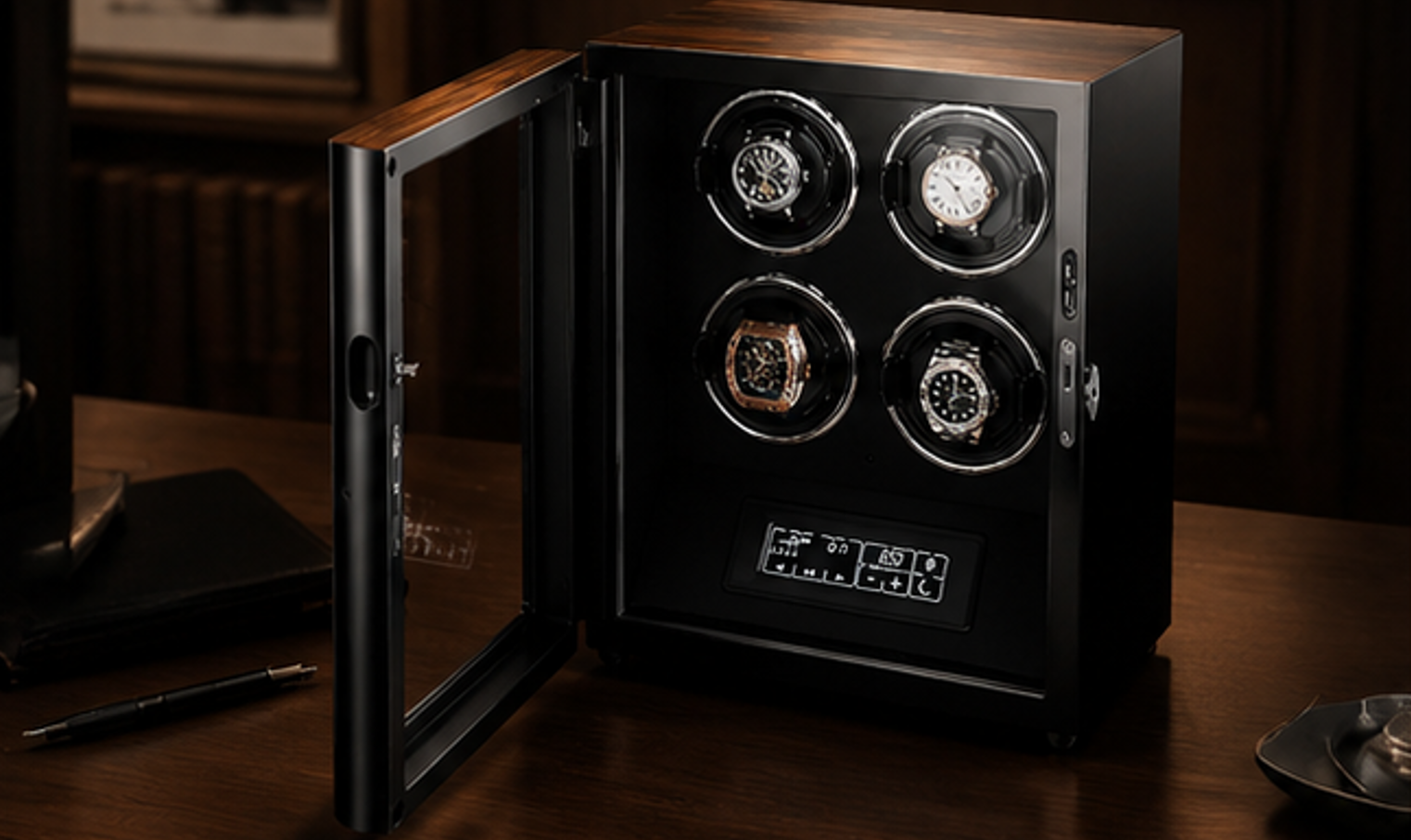
As a sales manager at Goochy, I have seen how manufacturing quality directly influences the performance and market acceptance of luxury watch winders.
A successful B2B partnership requires looking beyond catalogs and specifications to understand the actual capabilities behind the product.
This guide explains the key factors that professional buyers should evaluate when selecting a reliable watch winder manufacturer.
1. What Defines a High-Quality Watch Winder?
Many buyers initially compare watch winders based on visible features:
- Exterior design
- Number of winding slots
- Display functions
- Material appearance
- Price
While these factors are important, they only represent the surface of the product.
The real quality of a watch winder is determined by:
- Motor performance
- Electronic control system
- Preset winding programs
- Structural craftsmanship
- Material selection
- Electromagnetic performance
- Manufacturing consistency
A premium watch winder is not defined only by how it looks, but by how reliably it performs after thousands of operating cycles.
1.1 Motor Performance: The Foundation of Reliable Operation
The motor is one of the most important components inside a watch winder.
A high-quality motor should provide:
- Smooth rotation
- Low operating noise
- Long service life
- Stable performance during continuous operation
Premium watch winders often use reliable motors from established manufacturers. For example, Mabuchi motors are widely recognized in precision applications because of their quiet operation and durability.
A lower-quality motor may result in:
- Increased noise
- Unstable rotation
- Shortened product lifespan
- Poor user experience
For luxury accessories such as watch winders, motor quality directly affects how customers perceive the overall value of the product.
A reliable motor ensures that the watch winder can operate smoothly while maintaining a premium user experience.
1.2 Control System and Preset TPD Programs
The electronic control system determines how the watch winder operates.
A reliable control system manages:
- Rotation direction
- Operating intervals
- Start and stop functions
- Preset TPD programs
- Individual winding control (depending on model design)
Different automatic watch movements have different winding requirements.
Therefore, a quality watch winder should provide suitable preset programs rather than relying on a single fixed rotation pattern.
Professional watch winders use carefully optimized preset winding programs to accommodate a wide range of automatic movements.
Our watch winders feature selectable preset TPD programs including:
- 650 TPD
- 750 TPD
- 850 TPD
- 1000 TPD
- 1950 TPD
along with rotation options such as:
- Clockwise
- Counter-clockwise
- Bi-directional
Why TPD Settings Matter in Watch Winders
Turns Per Day (TPD) is one of the most important specifications when evaluating a watch winder.
Different mechanical movements require different winding cycles to maintain their power reserve.
A professional watch winder should provide:
✓ Multiple preset TPD options
✓ Appropriate rotation directions
✓ Stable and consistent winding cycles
However, TPD control should be understood correctly.
A quality watch winder does not necessarily need unlimited customization.
In most cases, professionally optimized preset programs are sufficient for a wide range of automatic watches.
The goal of a watch winder is not unlimited adjustment, but providing reliable winding programs suitable for different mechanical movements.
1.3 Craftsmanship and Material Selection
While internal components determine performance, exterior craftsmanship creates the visual and tactile experience expected from a luxury product.
The quality of a watch winder depends not only on whether it uses solid wood or engineered materials, but also on:
- Material grade
- Structural design
- Surface finishing
- Assembly precision
- Hardware quality
Enclosure Materials
Premium watch winders commonly use materials such as:
- Solid hardwood
- High-quality MDF with natural wood veneer
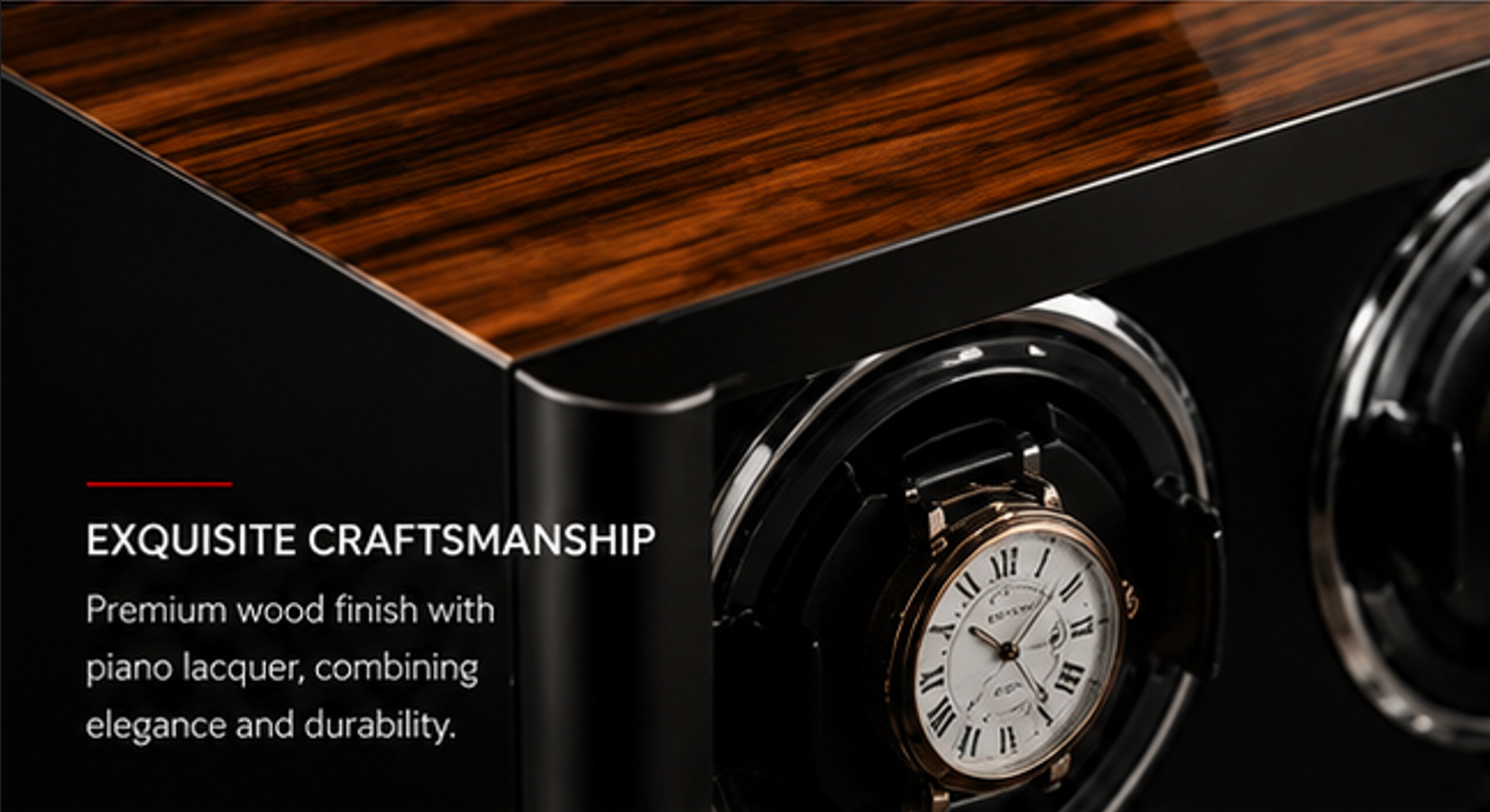
- Piano lacquer finishes
- Leather wrapping
High-quality engineered wood materials are widely used in luxury products because of their:
- Stability
- Consistency
- Smooth finishing capability
- Suitability for premium lacquer applications
The most important factor is not simply the material type, but how the material is processed and finished.
For luxury products, proper manufacturing techniques can transform different materials into a premium final product.
Luxury Finishing Details
Luxury appearance comes from careful craftsmanship.
Important details include:
- Smooth lacquer surfaces
- Even wood veneer patterns
- Precise edge finishing
- Durable hinges and hardware
- Clear viewing panels
Small production details often separate premium products from ordinary alternatives.
At Goochy, our manufacturing process includes:
- Woodworking
- Painting and finishing
- Polishing
- Assembly
- Final inspection
to ensure consistent quality across production batches.
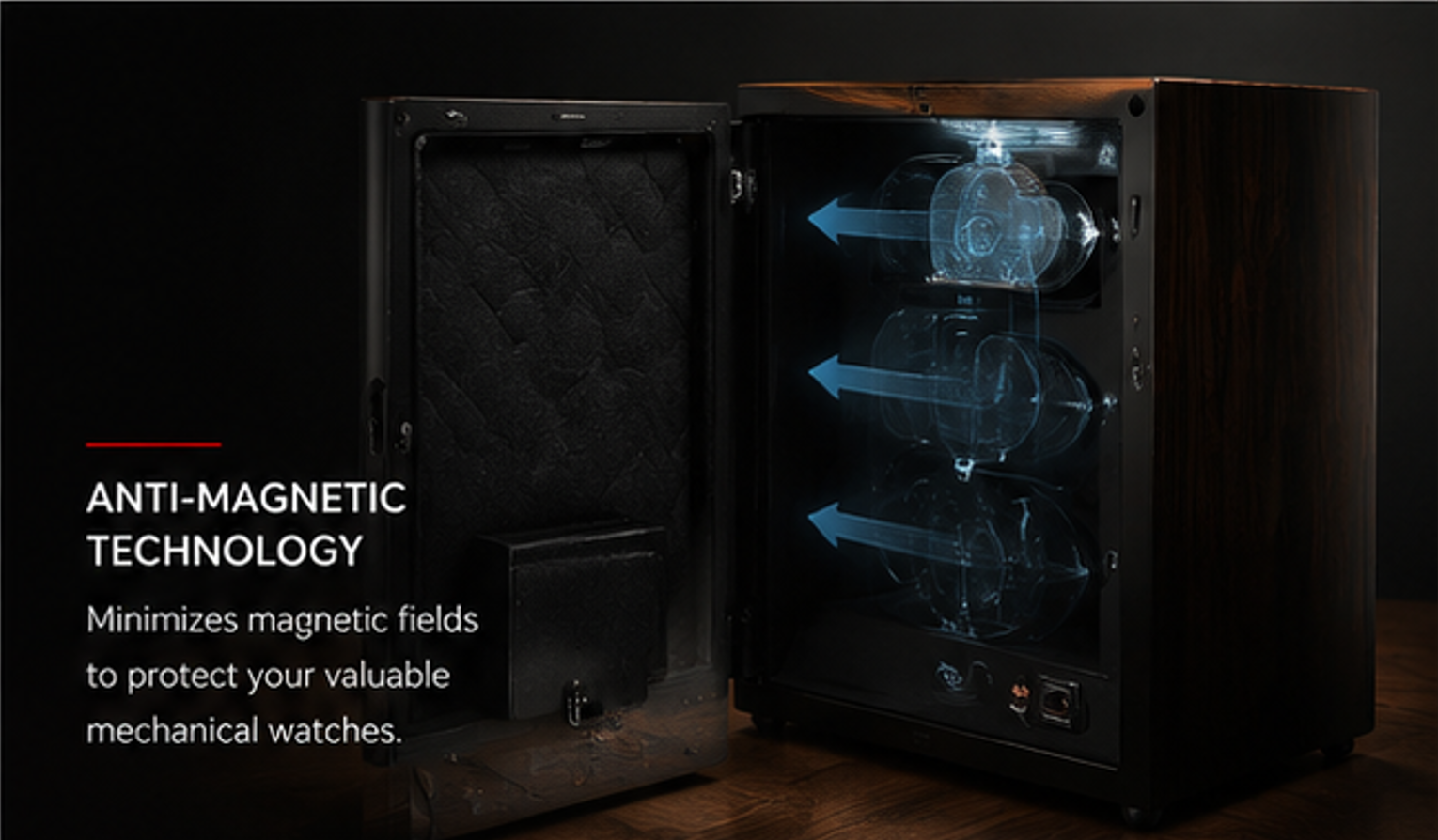
1.4 Anti-Magnetic Design and Electromagnetic Performance
Mechanical watches contain sensitive components that can be affected by strong magnetic fields.
Since watch winders contain electronic components and motors, professional manufacturers should consider electromagnetic performance during product design.
Potential concerns include:
- Motor-generated magnetic fields
- Electronic component interference
- Long-term exposure effects
How Manufacturers Reduce Magnetic Interference
Reliable watch winders may use:
- Appropriate motor selection
- Optimized internal component layout
- Magnetic shielding materials
- Product structure design
Professional manufacturers can also conduct magnetic field testing to evaluate whether the product design minimizes potential interference with mechanical watches.
Anti-magnetic performance should be evaluated separately through product design and testing, rather than assumed from general electrical certifications alone.
2. How Manufacturers Ensure Watch Winder Quality
For B2B buyers, product consistency is just as important as product design.
A single defective unit can lead to:
- Customer complaints
- Product returns
- Increased service costs
- Damage to brand reputation
Therefore, choosing a reliable manufacturer requires looking beyond product samples and evaluating the supplier's production processes, component management, and quality control systems.
A trustworthy watch winder manufacturer should have clear production procedures, reliable component control, proper testing methods, and the ability to maintain consistent quality across every production batch.
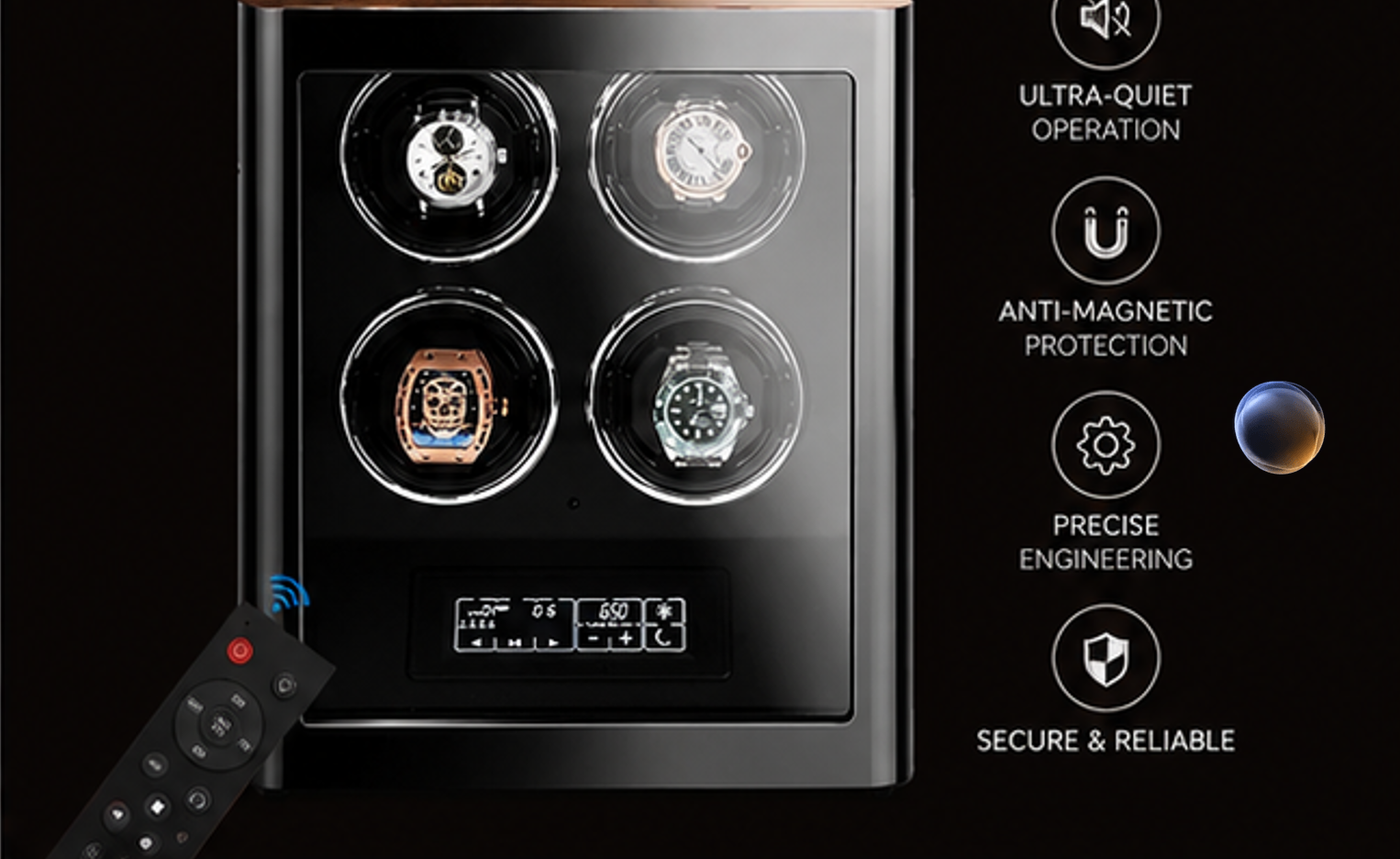
At Goochy, quality control is integrated throughout the manufacturing process, from component selection and production assembly to final inspection and packaging.
2.1 Component Selection and Supply Chain Management
The quality of a finished watch winder depends greatly on the consistency and reliability of its components.
A professional manufacturer should carefully manage:
- Motor suppliers
- Electronic components
- Power adapters
- Raw materials
- Hardware suppliers
Component Selection
Professional manufacturers maintain long-term relationships with trusted suppliers and evaluate components before production.
Important factors include:
- Component reliability
- Supplier consistency
- Quality documentation
- Production stability
For luxury products, component selection is not only about meeting basic specifications, but also ensuring long-term reliability and user satisfaction.
Production Consistency
For B2B buyers, receiving the same quality across repeated orders is critical.
A reliable supplier should maintain:
- Standardized production procedures
- Clear quality inspection requirements
- Stable material specifications
- Traceable production processes
This is especially important for:
- Retail brands
- Importers
- Distributors
- Private-label projects
For B2B partnerships, consistency across hundreds or thousands of units is often more important than the quality of a single sample.
2.2 Quality Control and Product Testing
Beyond certifications, internal quality control processes play an important role in ensuring product reliability.
A professional manufacturer should evaluate key performance areas including:
Noise Level Assessment
Luxury watch winders are often placed in:
- Bedrooms
- Offices
- Display rooms
Therefore, quiet operation is an essential part of user experience.
Manufacturers should evaluate:
- Motor noise
- Rotation smoothness
- Mechanical vibration
to ensure comfortable daily use.
A premium watch winder should operate quietly without disturbing the environment where it is placed.
Winding Accuracy and Consistency
A reliable watch winder should maintain stable winding cycles.
Quality evaluation may include:
- Rotation timing checks
- Direction verification
- TPD program accuracy
- Control system performance
This ensures that preset programs operate consistently according to design specifications.
Material and Structural Testing
The exterior quality of a luxury watch winder depends on both materials and craftsmanship.
Quality checks may include:
- Lacquer surface inspection
- Veneer consistency
- Hardware durability
- Hinge operation
- Structural stability
A premium appearance requires both quality materials and careful manufacturing processes.
Magnetic Field Evaluation
Since watch winders contain motors and electronic components, professional manufacturers should consider electromagnetic performance during development.
Magnetic field evaluation may include:
- Measuring magnetic field levels generated by internal components
- Reviewing motor placement
- Optimizing internal structure
- Reducing potential interference near the watch position
At Goochy, magnetic field testing is used as part of product evaluation to help ensure our watch winders are designed appropriately for mechanical watch storage.
3. Why Product Quality Matters for B2B Buyers
For individual consumers, a product issue usually affects one purchase.
For businesses, quality problems can impact:
- Customer trust
- Brand image
- Future sales opportunities
- Long-term partnerships
Therefore, selecting a reliable watch winder supplier is not only a purchasing decision, but also a business strategy.
The right manufacturing partner helps protect both product quality and the reputation of your brand.
3.1 Risks of Choosing Low-Quality Watch Winders
Price is often an important factor in procurement decisions.
However, choosing the lowest-cost option may create additional risks over the long term.
For B2B buyers, the impact goes beyond the product itself.
Poor-quality products may result in:
- Customer dissatisfaction
- Higher return rates
- Increased warranty claims
- Negative reviews
- Damage to brand reputation
The lowest purchase price does not always represent the lowest total cost. Product reliability, consistency, and after-sales support are equally important factors in supplier selection.
Common Problems Found in Low-Quality Watch Winders
Unstable Motor Performance
Lower-quality motors may cause:
- Excessive noise
- Uneven rotation
- Shortened lifespan
A premium watch winder should provide smooth and reliable operation over long periods.
Inconsistent Winding Performance
A poorly designed control system may result in:
- Incorrect rotation cycles
- Unstable programs
- Reduced user confidence
Reliable electronics are essential for maintaining consistent performance.
Insufficient Electromagnetic Protection
Poor internal design may increase the risk of electromagnetic interference.
Professional manufacturers should consider:
- Motor selection
- Component arrangement
- Magnetic field evaluation
during product development.
Poor Material and Finishing Quality
Luxury products are judged not only by function but also by appearance.
Common issues include:
- Uneven lacquer finishing
- Poor veneer matching
- Weak hardware
- Low-quality interior materials
These details directly affect how customers perceive the product.
3.2 Why Quality Consistency Matters for Bulk Orders
For B2B buyers, the challenge is not producing one excellent sample, but maintaining the same quality throughout ongoing production.
A reliable manufacturer should be able to provide:
- Stable production standards
- Consistent materials
- Repeatable craftsmanship
- Reliable inspection procedures
This is especially important for:
- Brand owners
- Retail chains
- Distributors
- Private-label projects
A successful B2B partnership depends on repeatable quality, not just an impressive first sample.
4. How to Choose the Right Watch Winder Manufacturer
Choosing a watch winder supplier is not only about finding a product. For brands, retailers, and distributors, the manufacturer behind the product is equally important.
A reliable manufacturing partner should provide:
- Consistent product quality
- Stable production capacity
- Flexible customization options
- Clear communication
- Long-term support
The right supplier is not simply a manufacturer that can produce watch winders, but a partner that understands quality expectations, brand requirements, and long-term business goals.
When evaluating a potential supplier, B2B buyers should consider several key areas, including factory capability, customization ability, production flexibility, and after-sales support.
4.1 Evaluate Factory Capability
The first step is confirming whether a supplier is a genuine manufacturer or simply a trading company.
A capable manufacturer should have:
- Real production facilities
- Experienced production teams
- Quality control procedures
- Product development capabilities
Factory Experience and Production Ability
When evaluating a supplier, consider:
- Manufacturing environment
- Production processes
- Quality management
- Product development experience
A professional factory should be able to demonstrate:
- Production workshops
- Assembly processes
- Quality inspection areas
- Packaging procedures
At Goochy, our 3,000㎡ facility covers key manufacturing processes including:
- Woodworking
- Painting and finishing
- Assembly
- Quality inspection
- Packaging
Industry Experience
Experience matters when producing luxury storage products.
A manufacturer with years of experience understands:
- Material selection
- Structural design
- Production challenges
- Quality consistency
Since 2013, Goochy has developed more than 700 premium storage products, serving customers across international markets.
This experience allows us to understand the expectations of brands, retailers, and distributors looking for reliable collection storage solutions.
Production Scalability
A reliable supplier should be able to support both:
- Small initial projects
- Larger repeat orders
This is especially important for brands planning long-term cooperation.
A supplier that can maintain quality while scaling production provides greater confidence for future growth.
4.2 Assess OEM and ODM Capabilities
For many B2B buyers, customization is a key requirement.
A strong manufacturer should be able to support:
- Custom product designs
- Private labeling
- Material selection
- Functional adjustments
- Logo customization
- Packaging solutions
Design and Development Support
A professional supplier should provide assistance with:
- Product concepts
- Material recommendations
- Structural improvements
- Prototype development
This helps brands transform ideas into production-ready products.
For OEM and ODM projects, close cooperation between the buyer and manufacturer is essential.
Material and Finish Options
Luxury watch winders require attention to both function and appearance.
Customization options may include:
- Wood veneer selection
- High-gloss lacquer
- Matte finishes
- Leather wrapping
- Logo customization
- Interior design options
The ability to provide different finishes demonstrates a manufacturer's flexibility and craftsmanship.
MOQ and Production Flexibility
For OEM and ODM projects, minimum order quantity is an important consideration.
A professional supplier should provide reasonable flexibility depending on:
- Product complexity
- Materials
- Customization requirements
- Production process
At Goochy, OEM/ODM projects are available with flexible MOQ requirements starting from 50 units depending on product specifications and customization requirements.
4.3 Communication and After-Sales Support
A successful B2B partnership depends on more than manufacturing.
Clear communication is essential throughout:
- Product development
- Sampling
- Production
- Shipping
- After-sales service
Important Questions to Ask Suppliers
Before cooperation, buyers should evaluate:
Communication
- How quickly does the supplier respond?
- Can they clearly explain technical details?
- Are production updates provided regularly?
Quality Support
- Can they provide inspection information?
- Do they have quality control procedures?
- How do they handle potential defects?
After-Sales Service
A reliable partner should provide:
- Technical support
- Spare parts assistance
- Warranty policies
- Problem-solving support
A supplier's after-sales capability reflects their confidence in product quality and long-term cooperation.
5. Advantages of Working With an Experienced Watch Winder Manufacturer
Working directly with an experienced manufacturer provides several advantages compared with sourcing through multiple intermediaries.
Better Product Control
Direct communication allows buyers to:
- Discuss technical requirements
- Adjust designs quickly
- Improve product details
- Solve issues more efficiently
More Flexible Customization
Experienced manufacturers can provide:
- OEM solutions
- ODM development
- Private label products
- Custom finishes
This allows brands to create products that match their market positioning.
More Efficient Supply Chain
Working with a direct manufacturer can help businesses achieve:
- Better cost control
- Faster communication
- More efficient product updates
- Improved production coordination
Long-Term Partnership
For luxury products, consistency matters.
A reliable manufacturer becomes more than a supplier — it becomes a long-term partner supporting your brand growth.
6. Frequently Asked Questions
Are all watch winders anti-magnetic?
No.
Not all watch winders provide the same level of electromagnetic protection.
Professional manufacturers should consider magnetic interference during product design through:
- Motor selection
- Internal layout optimization
- Magnetic field evaluation
Buyers should review the manufacturer's technical information rather than assuming every watch winder has the same level of protection.
How important is the TPD setting on a watch winder?
TPD is an important specification because different automatic movements have different winding requirements.
A quality watch winder should provide:
- Multiple preset TPD programs
- Suitable rotation directions
- Stable winding cycles
Our watch winders provide preset programs including:
- 650 TPD
- 750 TPD
- 850 TPD
- 1000 TPD
- 1950 TPD
Users should select the appropriate program based on their watch movement requirements.
Can a watch winder damage my automatic watch?
A high-quality watch winder used correctly is unlikely to damage a modern automatic watch.
Potential issues usually come from:
- Poor motor quality
- Excessive vibration
- Incorrect operation
- Insufficient electromagnetic control
Choosing a reliable manufacturer and using appropriate settings are important for safe operation.
What is the typical warranty for a quality watch winder?
Warranty periods vary depending on the manufacturer and product specifications.
A reliable supplier should clearly define:
- Warranty coverage
- Service procedures
- Spare parts availability
- Technical support
A transparent warranty policy reflects confidence in product quality and long-term cooperation.
Conclusion
Choosing a high-quality watch winder requires looking beyond appearance and basic specifications.
For B2B buyers, the most important factors include:
✓ Reliable motors and control systems
✓ Professionally optimized preset TPD programs
✓ Quality craftsmanship and materials
✓ Proper electromagnetic design
✓ Consistent manufacturing processes
✓ A trustworthy supplier with OEM/ODM capabilities
The right watch winder supplier should help protect not only the watches themselves, but also the reputation and growth of your brand.
At Goochy, we specialize in luxury watch winders and collection storage solutions with more than a decade of manufacturing experience.
With:
- 3,000㎡ production facility
- 700+ product designs
- OEM and ODM capabilities
- Flexible customization options
- International certification support
we help brands, retailers, and distributors develop premium watch storage solutions that combine functionality, craftsmanship, and long-term reliability.
Looking for a reliable watch winder manufacturer for your next project? Contact Goochy to discuss your OEM or ODM requirements.
