
Are you trying to distinguish meaningful luxury watch packaging trends from short-lived design fads? Evaluating new materials, structures, and presentation ideas can be difficult, especially when their production feasibility, cost, and relevance to customers vary from one project to another. Reviewing these factors early can help brands avoid investing in concepts that do not suit their products, budgets, or target markets.
Current luxury watch packaging trends commonly include more responsible material choices, carefully planned unboxing experiences, bespoke customization, and an emphasis on durable construction and finish quality. Their value depends on how well they support the watch, brand positioning, intended customer, budget, and distribution conditions; no single trend guarantees stronger loyalty or higher perceived value.
As someone deeply involved in manufacturing luxury packaging for over a decade, I've seen countless trends emerge. Join me as we explore what truly matters in the world of luxury watch packaging, moving beyond the hype to understand the tangible realities of production and value.
Are All "Trends" Equal in Luxury Watch Packaging?
Navigating new packaging ideas can be difficult because a visually appealing concept may not always be practical for a specific product or production volume. Have you considered whether a proposed trend improves function, presentation, or brand consistency enough to justify its cost? Examining feasibility before development can reduce the risk of investing in features that offer limited value for the intended customer.
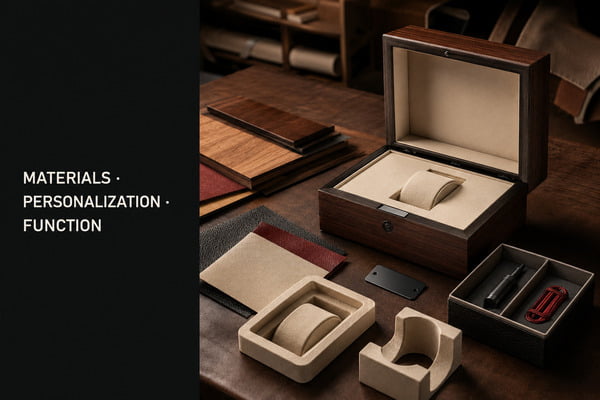
Not all luxury watch packaging trends are equally relevant to every project. Some reflect broader changes in customer preferences or manufacturing capabilities, while others may suit only certain brands or markets. Their relevance should be assessed through material feasibility, production cost, performance, order volume, and fit with the brand rather than through popularity alone.
From my vantage point on the factory floor and in client consultations, I can tell you that understanding the difference between genuine innovation and passing fancy is crucial for making smart investment decisions in your watch packaging.
Unpacking Real Trends vs. Marketing Noise
When clients approach us at Goochy, they often bring ideas they've seen online, asking about the latest in luxury watch packaging trends. My first step is always to help them differentiate between what's genuinely impactful and what's simply marketing noise. A true trend in our industry isn't just a pretty picture; it's something that can be consistently produced, offers tangible benefits to the end-user, and aligns with broader market shifts, like sustainability.
For instance, interest in materials with clearer sourcing or environmental documentation has become more visible in many markets. We have received enquiries about certified wood, recycled-content materials, and non-animal leather alternatives. Each option still needs to be evaluated for traceability, durability, finish compatibility, availability, and the requirements of the destination market. A certification or material label should not by itself be treated as proof that an entire package has a lower environmental impact. Conversely, some visually striking elements may be difficult to reproduce consistently, may not provide the required protection, or may add cost without supporting the project brief. When we look at a "trend," we ask:
- Is it sustainable? Can we reliably source the materials and maintain quality?
- Does it enhance functionality? Does it improve protection, display, or the unboxing experience?
- Is it cost-effective at scale? Can it be produced efficiently for our B2B clients?
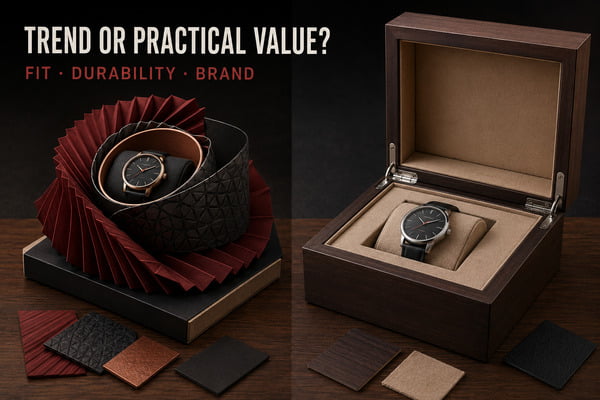
In our experience, the most useful ideas tend to support the package's core purposes: protecting and presenting the watch while expressing the brand appropriately. Options such as magnetic closures or concealed hinges can contribute to a cleaner appearance and a controlled opening experience when they are correctly specified and fitted. Their suitability depends on the box structure, watch weight, transport needs, target cost, and desired aesthetic.
How Do These Trends Translate into Manufacturing Realities?
It’s one thing to talk about exciting new luxury watch packaging trends and quite another to see them through from concept to creation. Have you ever wondered what goes on behind the scenes to bring innovative packaging designs to life, from material selection to the final polish? Without a clear understanding of the manufacturing process, it’s hard to evaluate whether a supplier can truly deliver on trendy promises.
Turning a packaging concept into a repeatable product requires appropriate material sourcing, suitable production techniques, and defined quality-control criteria. This may involve evaluating certified or alternative materials, confirming finish compatibility, refining cutting and wrapping processes, and agreeing on inspection or testing requirements for the intended production volume.
At our 3,000-square-meter facility, we see how every design decision impacts the production line. From the initial wood selection to the final inspection, each step is critical in delivering on the promise of luxury.
The Manufacturing Lens: Material, Craftsmanship, and Production Realities
For us at Goochy, every trend we embrace is filtered through a manufacturing lens. It's not enough for a design to look good on paper; it needs to be feasible, durable, and meet the high standards expected for luxury watch packaging. This involves a deep dive into materials, craftsmanship, and the realities of large-scale production.
Material Sourcing and Innovation: When a client asks for something like "sustainable wood packaging," we first clarify what the claim is intended to mean and what evidence is required. Options may include wood covered by a valid chain-of-custody certificate, materials with verified recycled content, bamboo, or selected composite structures. Each option still needs to be assessed for grain, density, finish compatibility, durability, availability, and relevant documentation. For leather applications, non-animal alternatives can be considered when they meet the required appearance, feel, abrasion resistance, colorfastness, and project specifications. Performance varies by material and supplier, so samples and relevant test reports should be reviewed before claims are made about shipping durability or long-term storage.
Craftsmanship and Finishing Techniques: Implementing trends such as sleek, minimalist designs often places greater emphasis on surface consistency because small defects may be more visible. Depending on the project, we can use a range of finishing techniques:
- Premium Lacquer Finishes: Deep gloss or smooth matte finishes may require multiple coating, curing, sanding, and polishing stages, depending on the substrate and specified result.
- Leather Wrapping: Precision cutting and wrapping of leather or vegan leather, often combined with subtle stitching, demands skilled artisans to avoid seams or imperfections.
- Silk Printing & Hot Stamping: For branding and intricate details, these techniques require precise alignment and pressure to ensure crisp, durable logos and patterns.
- Structural Innovations: We've perfected elements like concealed hinges for a clean look and magnetic closures that provide a satisfying "click" – these seem simple but require exact engineering and fitting.
Quality Control from Concept to Delivery: Adopting new materials or more complex structures may require additional inspection criteria or project-specific tests. A typical quality-control process can include checks at multiple stages:
- Material Inspection: Incoming materials are checked for defects, consistency, and compliance with specifications (e.g., wood moisture content, leather thickness).
- In-Process Checks: During cutting, assembly, and finishing, our craftsmen perform checks to catch issues early. This includes checking for alignment, finish quality, and structural integrity.
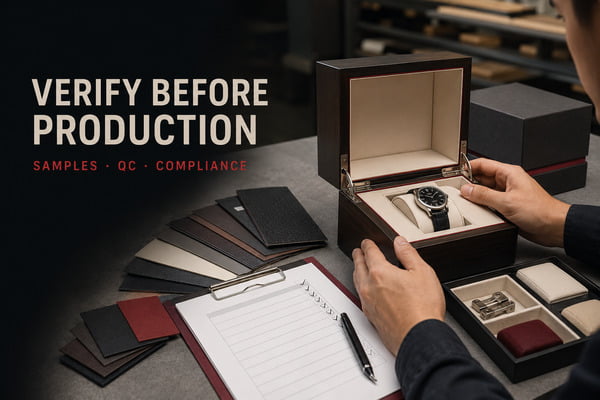
- Final Product Inspection: Before packing, units can be visually inspected and relevant functions checked, such as lid operation, hinge movement, alignment, or closure performance. Transport or environmental tests should be agreed according to the product, packaging method, destination, and client requirements rather than assumed for every order. Certifications or test reports may apply to a complete electrical product, power adapter, component, or material and should always be checked against the certificate holder, model, scope, standard, and target market.
My team and I are always thinking about how to produce innovative designs efficiently while maintaining the integrity and luxury feel. It's a balance between embracing new ideas and upholding the stringent standards our clients expect.
How Do You Choose the Right Supplier Amidst Evolving Trends?
With so many manufacturers claiming to be at the forefront of luxury watch packaging trends, selecting the right partner can feel like a daunting task. How can you confidently assess a supplier's genuine capabilities and ensure they can deliver on their promises, especially when it comes to custom or innovative designs? Without clear criteria, you risk partnering with a manufacturer who can't meet your brand's specific needs or quality expectations.
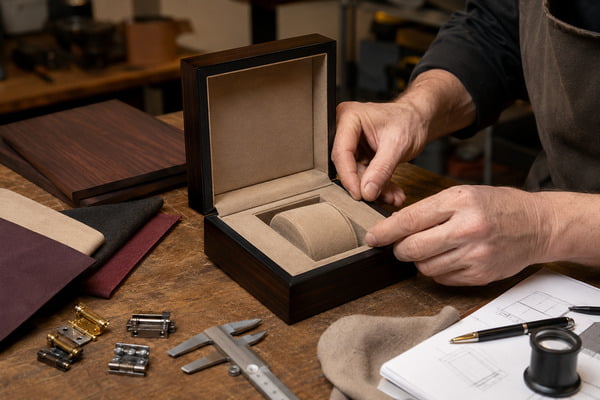
Choosing a supplier involves evaluating relevant production experience, material documentation, customization capability, communication, capacity, and quality-control procedures. Buyers can review comparable samples or projects, clarify material origins and specifications, confirm how custom designs will be validated, and agree on measurable acceptance criteria before production.
From my daily interactions with clients and overseeing production, I've learned that a truly credible supplier offers more than just a quote; they offer partnership, expertise, and a commitment to transforming your vision into a tangible, high-quality product.
Supplier Credibility in a Trending Market
In a market buzzing with new luxury watch packaging trends, it’s essential to choose a manufacturing partner who can deliver not just on promises, but on tangible quality and reliable service. For our clients, who range from global watch brands to Amazon sellers, evaluating supplier credibility goes beyond reviewing a portfolio; it involves understanding their operational depth.
Proven Capabilities and Experience: When I talk to potential clients, I explain our relevant experience. With over a decade in the business, we've developed and produced more than 700 storage and packaging designs. This range of projects helps us provide practical feedback on feasibility, likely cost drivers, and areas that may require sampling or further development. We also offer more than 100 stock models, although availability and specifications should be confirmed when an enquiry is made.
Material Transparency and Sourcing Expertise: In today's market, many clients request greater transparency regarding materials, especially when environmental claims are involved. A supplier should explain what documentation is available, such as applicable wood certificates, material specifications, composition information, or verified recycled-content reports. Where available and relevant, we can provide supporting documents for review. Buyers should verify that each document covers the material, supplier, model, batch, or regulatory requirement relevant to their project; documentation for one component does not automatically certify the finished package.
Customization Flexibility and Technical Support: Many luxury watch brands require bespoke solutions. We offer OEM/ODM customization with MOQs starting from 50 units for eligible designs; the actual MOQ depends on the structure, materials, hardware, finishing processes, and level of customization. Services may include:
- Design Consultation: Working closely with your design team to refine concepts for manufacturing.
- Prototyping: Creating physical samples for approval before full production.
- Material Selection Advice: Guiding you on the best materials to achieve your desired aesthetic and function within budget.
- Structural Adaptation: Modifying internal layouts, adding special compartments, or integrating unique display features.
Our product development, sampling, production, and quality control teams work closely with clients to ensure that product details align with their brand requirements and intended use. Beyond producing to specification, we provide practical recommendations on materials, structure, manufacturing feasibility, and durability based on our production experience.
How Do Packaging Trends Serve the Customer Experience and Brand Identity?
Ultimately, the goal of adopting new luxury watch packaging trends isn't just to be "on-trend," but to elevate the customer experience and reinforce brand identity. Have you ever considered how each element of your watch packaging contributes to the narrative of your brand and the lasting impression it leaves on your client? Overlooking this crucial connection can result in packaging that feels disjointed or fails to capture the true essence of your luxury product.
Well-chosen packaging features can support the end-user experience and brand identity by improving presentation, organizing the product and accessories, and providing an appropriate level of protection. Packaging may also reinforce brand storytelling, although its effect on perceived value depends on design quality, consistency with the watch, and customer expectations.
For us, every box truly is the beginning of a story. We understand that our clients aren't just buying a box; they're investing in an experience, a statement, and a legacy for their customers.
Customer-Centric Trend Adaptation
At Goochy, our philosophy, "Every box is the beginning of a story," underscores our approach to luxury watch packaging trends. We believe that packaging is an extension of the luxury timepiece itself, integral to both the immediate unboxing experience and its long-term role as a collectible item. Adapting trends effectively means focusing on how they enhance the customer journey and strengthen brand identity.
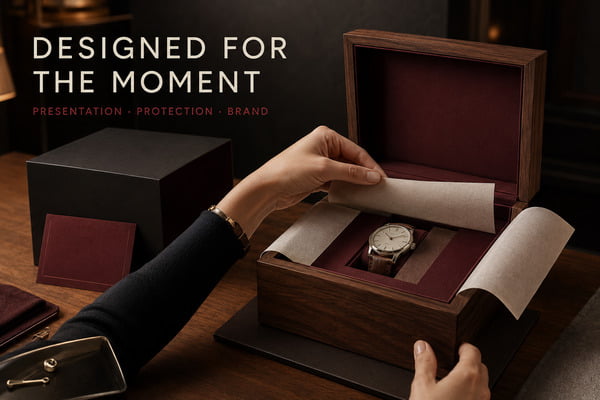
The Unboxing Experience as a Ritual: For many luxury purchases, packaging forms part of the first physical interaction with the product. A thoughtful internal layout, controlled opening mechanism, and suitable lining can make the presentation feel more considered, provided these features also suit the product and brand.
- Layered Presentation: Often, packaging includes multiple layers – a protective outer sleeve, a main presentation box, and then specific compartments for the watch, warranty, and accessories. Each layer is designed to be discovered, building anticipation.
- Sensory Details: Texture, opening resistance, sound, and visual presentation can influence the unboxing experience. Strong or added scents should generally be avoided unless intentionally specified and assessed, as odor may also indicate material or adhesive concerns.
- Personalization: Trends in customization extend to individual packaging elements, allowing brands to include personalized messages, unique inserts, or special display features that resonate directly with the end-user.
Enhancing Brand Identity and Storytelling: Packaging is a silent brand ambassador. Trends in design and material choices allow brands to tell their story without uttering a word.
- Material Selection: A brand focused on heritage might opt for classic solid wood and traditional lacquering. A modern, avant-garde brand might lean towards minimalist designs, innovative recycled materials, or unique textures.
- Branding Elements: Precise logo placement, choice of printing techniques (embossing, debossing, hot stamping), and even custom-designed hardware (like clasps or handles) all play a role in reinforcing brand identity.
- Consistency: Ensuring that the packaging design, materials, and quality are consistent with the watch itself is crucial. A disconnect here can cheapen the perception of the luxury item.
Long-Term Storage and Display Value: Unlike many other product categories, luxury watch packaging often has a life beyond the initial unboxing. Many owners keep their watches in their original boxes for storage or display. This means the packaging needs to be:
- Durable: Designed for repeated use and to help reduce exposure to dust, scratches, and everyday contact. The level of impact protection depends on the structure, materials, fit, and any relevant testing.
- Functional: Well-designed interiors that securely hold the watch and any accessories, often with soft cushions or custom inserts.
- Aesthetic: Beautiful enough to be displayed alongside the watch itself, complementing a collector's environment. We design our watch cases and winders to be "collection art," not just containers.
In our work with brands, we have seen that packaging aligned with the product and customer journey can contribute to a more coherent presentation. Its effect on loyalty or market position, however, depends on the complete product and service experience rather than packaging alone.
Frequently Asked Questions
What are the most impactful sustainable luxury watch packaging trends?
Common approaches include considering FSC-certified wood, materials with verified recycled content, reusable structures, and suitable non-animal leather alternatives. Their environmental benefits should be assessed using relevant evidence, including sourcing, recycled-content documentation, durability, production, transport, and end-of-life considerations; the material name alone does not establish a lower overall footprint.
How does advanced craftsmanship contribute to luxury watch packaging trends?
Skilled manufacturing can improve the fit, alignment, finish, and repeatability of features such as magnetic closures, concealed hinges, lacquer coatings, and leather wrapping. Results still depend on the design, materials, process controls, approved sample, and inspection criteria; “flawless” execution should not be assumed.
Can custom luxury watch packaging trends be implemented for smaller orders?
Some custom features can be produced in smaller runs. At Goochy, the MOQ starts from 50 units for eligible OEM/ODM projects, but the actual quantity depends on the structure, materials, tooling, hardware, and finishing processes. Sampling, design support, and material options should be confirmed for each project.
Why is the unboxing experience a key luxury watch packaging trend?
The unboxing experience is important because it shapes the customer's first physical interaction with the product. Thoughtful structure, clear product presentation, and consistent brand details can support customer satisfaction and brand recognition, although they do not by themselves guarantee loyalty.
What quality standards should I look for in a luxury packaging manufacturer?
Ask which standards or regulations apply to the specific product and destination market, particularly for electrical watch winders. Review whether documents such as CE, UL, FCC, PSE, or GS relate to the finished model, power adapter, component, or material, and verify their scope and validity. Also assess the supplier's material controls, approved-sample process, in-process checks, final inspection criteria, and willingness to support third-party inspection.
Conclusion
Understanding luxury watch packaging trends is less about following every new idea and more about selecting features that suit the brand, watch, customer, budget, and supply chain. We have explored how material choices, craftsmanship, and customer-focused design move from concept to production. Evaluating feasibility, documentation, supplier capability, and measurable quality requirements can support better purchasing decisions.
At Goochy, we help brands evaluate and develop bespoke or ready-made watch packaging and storage solutions. With more than a decade of manufacturing experience, we can discuss material options, construction, finishing, sampling, order requirements, and quality-control expectations for a specific project. If you are planning new watch packaging, I invite you to connect with my team to review the design and production requirements.
