
Struggling to navigate the wide range of watch winders available for your business or clients? It can be difficult to compare the options and determine which features offer practical value. Many guides provide only general advice, leaving important purchasing questions unanswered. This guide explains the main factors to consider when evaluating a watch winder.
A watch winder can be a useful accessory for certain automatic timepieces, and choosing the right one isn't a one-size-fits-all decision; it depends on the specific collection, budget, aesthetic preferences, and the quality expectations of the end-users. Understanding the basic mechanics and construction can support a more informed inventory decision.
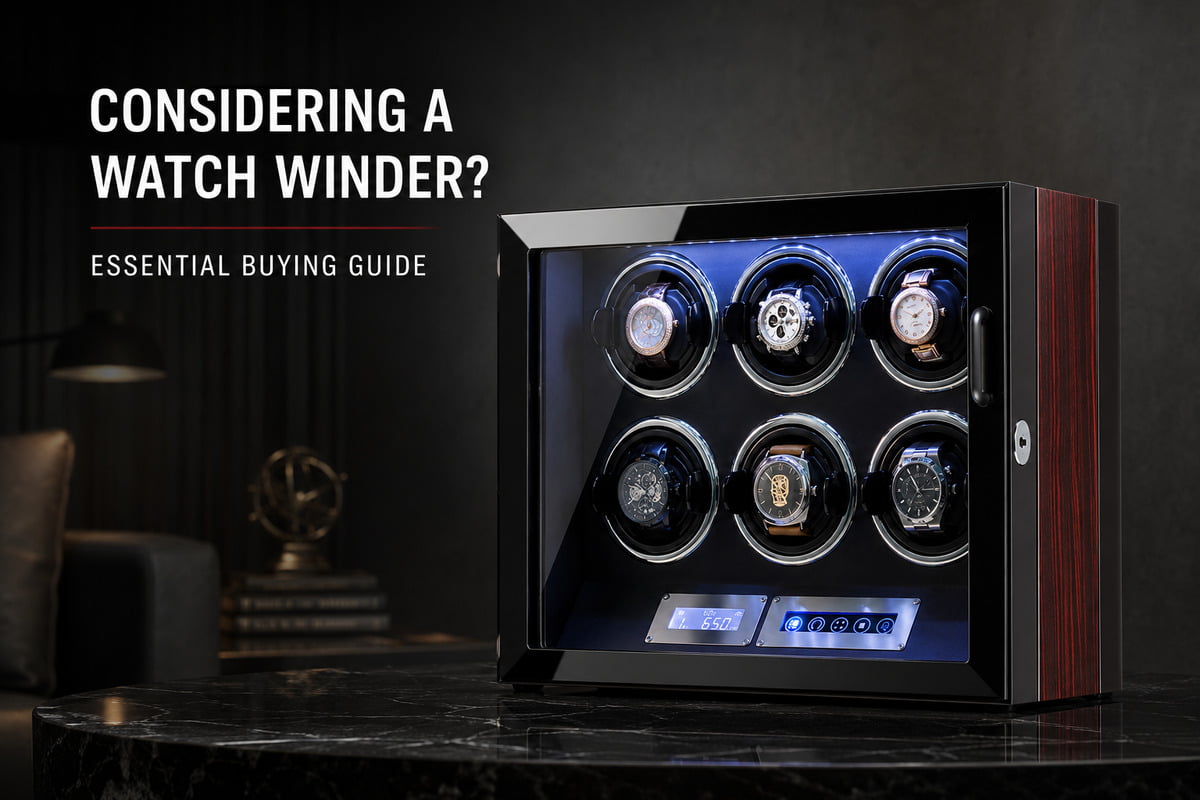
So, what goes into making an informed choice and selecting watch winders that meet both your business needs and the preferences of watch enthusiasts? Let's examine the essential factors.
Why Can't I Just Pick Any Watch Winder?
The market offers watch winders ranging from entry-level single units to elaborate multi-watch cabinets, which can make comparison difficult. Buyers looking to stock inventory might be tempted to focus mainly on price or appearance. However, these factors alone may not identify the most suitable option.
No single watch winder is universally "best" because requirements for capacity, winding specifications such as Turns Per Day and rotation direction, and aesthetic preferences vary widely. Overlooking these requirements can lead to a poor user experience or a winder that is unsuitable for a particular automatic movement.
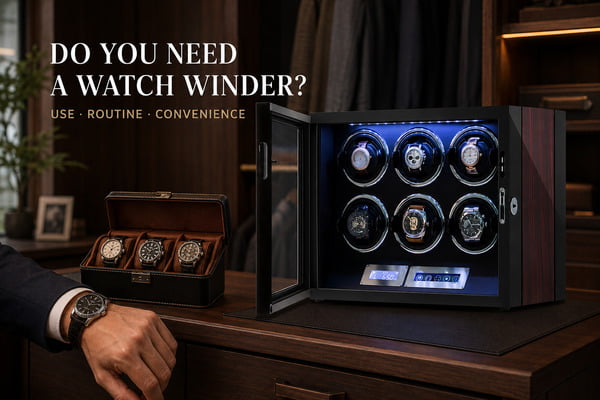
With over a decade of experience working with B2B buyers—from online retailers to luxury brand representatives—I have found that many initially ask for "the best winder," hoping for a simple answer. One of the first things I recommend is understanding their end-customers' collections and specific needs. This step is sometimes overlooked, but it can significantly influence the watch owner's experience.
Understanding Your Collection's Needs
Before looking at features, a fundamental question is: What kind of watches will this winder serve?
- Number of Watches: Is it for a single automatic watch or a growing collection of 2, 4, 6, or even 12 pieces? This helps determine the required capacity. For businesses, offering more than one capacity can help serve different collector profiles.
- Automatic vs. Quartz/Manual: A watch winder is intended for compatible automatic watches. Quartz watches generally run on batteries, while manual-wind watches require hand-winding, so neither normally benefits from a standard watch winder.
- Specific TPD (Turns Per Day) & Direction Requirements: This is an important technical consideration. Automatic movements may have recommended TPD and rotation-direction settings—clockwise, counter-clockwise, or bidirectional—which should be confirmed with the watch manufacturer or movement documentation. Unsuitable settings may leave a watch insufficiently wound or operate it more than necessary. We encourage buyers to include clear setting guidance in their product listings.
- Complications: A winder can be convenient for compatible watches with complications such as perpetual calendars or moon-phase displays because it may reduce the need to reset them after the watch stops. Whether continuous winding is appropriate should still be considered for the specific movement and owner's usage pattern.
Personal Preferences & Practical Considerations
Beyond the watches themselves, the user's environment and style also play a significant role.
- Noise Level: A winder placed in a bedroom or quiet study should operate at a noise level acceptable for that environment. Motor selection, gearing, case construction, placement, and ambient noise can all affect perceived sound. Noise is therefore an important factor in our model evaluation and quality checks at Goochy.
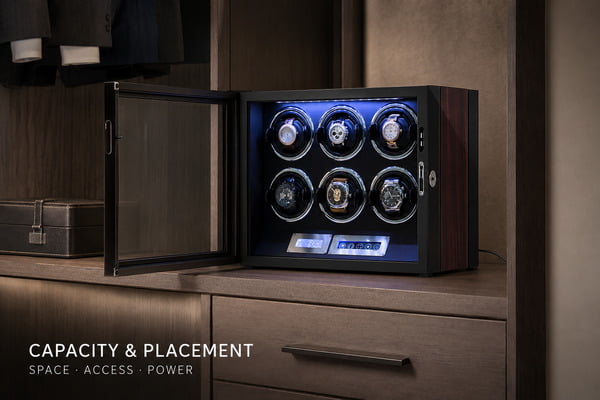
- Size and Placement: Does the winder need to fit inside a safe, sit on a dresser, or serve as a display piece in a living room? Dimensions and access to a power source should be considered.
- Design and Material: Appearance is an important part of many luxury products. Will the winder suit modern, minimalist décor or a classic wood interior? Materials and finishes such as wood-based panels, veneers, leather coverings, and carbon-fiber-look surfaces can influence appearance, feel, durability, maintenance, and perceived value.
- Budget: Budget is always a factor, but B2B buyers also need to balance quality, features, price, and the expectations of their target market. A higher price does not automatically indicate better quality, although investing in verified components and consistent quality control may help reduce avoidable service issues.
Considering these variables upfront increases the likelihood that the selected watch winder will suit its intended use and end-user. The goal is to provide an appropriate solution rather than simply add another product to the range.
Deciphering Watch Winder Technical Specs: What Do They Really Mean for Your Watch?
When you look at a watch winder's specifications, you might see terms such as "Turns Per Day," "multiple rotation modes," or "anti-magnetic protection." These terms help explain how a winder operates, but their relevance depends on the particular watch movement and product design. Misinterpreting them can result in inefficient winding or an unsuitable operating pattern.
Specifications such as TPD, rotation direction, operating cycles, and motor type affect how a watch winder performs and whether it is suitable for a particular automatic movement. Checking these specifications against the watch manufacturer's guidance can support appropriate use and a better user experience.
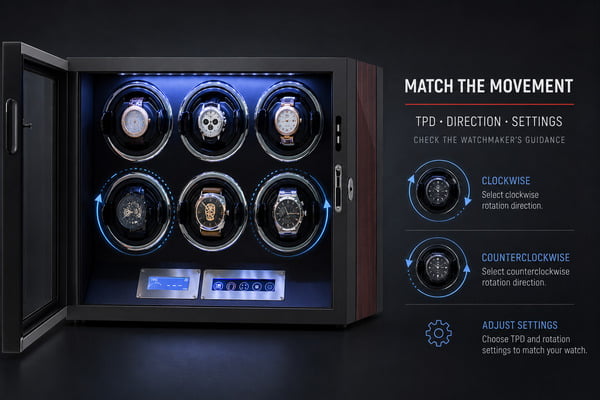
At Goochy, we evaluate both appearance and operating performance during product development. Matching the available TPD and rotation settings to the intended range of watches is important, but the correct setting ultimately depends on the watch or movement manufacturer's guidance. A winder should be assessed as an accessory that supports a suitable operating routine, not as a device that guarantees a watch's accuracy or mechanical condition.
Turns Per Day (TPD) & Rotation Direction
These are central elements of watch winder functionality.
- What is TPD? Turns Per Day describes the number of rotations a winder is programmed to perform within a 24-hour period. An automatic movement is normally wound by wrist motion, and a winder provides controlled rotational cycles while the watch is not being worn. If the setting is insufficient for the movement, the watch may eventually stop. Many modern automatic movements have mechanisms intended to limit overwinding, but using more rotations than necessary may provide no practical benefit. The recommended setting should be confirmed for the specific movement.
- Rotation Direction: Depending on the movement, a watch may wind clockwise, counter-clockwise, or in both directions. The appropriate setting should be confirmed for each watch. Many of our models provide selectable CW, CCW, and bidirectional programs, but available settings vary by model.
- Why it Matters for Buyers: B2B buyers should check that the winder's available TPD settings, rotation directions, and operating cycles suit the watches their customers are likely to own. There is no single TPD range that can be assumed to cover every automatic movement. Providing a settings guide—and directing customers to the watch manufacturer's instructions when needed—can be useful.
Motor Types & Noise
The motor is a key operating component of a watch winder. Its design and integration can affect rotation consistency, sound, vibration, and service life.
- Motor Quality: Motor quality cannot be judged by country of origin or brand name alone. Specifications, the drive system, installation, operating load, and quality control all influence performance. Some Goochy models use Japanese Mabuchi motors; the motor and finished-product testing requirements should be confirmed for the specific model and project.
- Noise Considerations: For a winder placed near a bed or in a quiet office, low perceived noise may be important. Motor characteristics, gearing, case resonance, installation, and placement can all influence sound and vibration. We therefore consider noise during model evaluation and production checks, while actual perceived sound will also depend on the user's environment.
Anti-Magnetic Protection
Magnetic exposure is relevant to mechanical watches, but claims about protection should be evaluated carefully.
- The Problem: Sufficiently strong magnetic fields can affect components within a mechanical watch and cause changes in timekeeping. The outcome depends on the field strength, exposure, movement design, and the watch's own magnetic resistance; it should not be assumed that every nearby phone or laptop will magnetize a watch.
- The Solution: Some watch winders may use low-magnetic components, motor placement, or structural design intended to reduce magnetic exposure at the watch position. This should not be described as shielding or anti-magnetic protection unless the specific model has been tested to a defined method and limit. Relevant construction and test information should therefore be confirmed for each Goochy model.
- Why it Matters for Buyers: Buyers concerned about magnetic exposure should request model-specific construction details or test evidence rather than rely on a general anti-magnetic claim. The watch's own magnetic-resistance specification and the intended use environment also need to be considered.
Understanding these technical aspects helps buyers look beyond appearance and select watch winders that are suitable for the intended watches and use environment.
What Goes Into a Quality Watch Winder? Inside the Manufacturing Process.
Beyond operating specifications, physical construction influences a watch winder's service life, appearance, sound, and perceived quality. A winder needs to function consistently while also meeting the finish expectations of its target market. Through working closely with clients and our factory teams, I have seen how material selection, component integration, and production control all contribute to the finished product.
A well-made watch winder combines materials appropriate to its design and price point, compatible internal components, controlled assembly, and documented quality checks. Durability, performance, and appearance should be evaluated through the specifications, samples, and testing relevant to the particular model rather than assumed from a material name alone.
In our Guangxi factory projects, differences between watch winder models can be seen in factors such as the coating system, panel and joint precision, hardware alignment, lining application, and care taken during assembly. The details that matter depend on the chosen construction and finish rather than on a single definition of "high-end."
Materials Matter: The Foundation of Quality
The materials chosen for a watch winder influence its construction, appearance, weight, maintenance requirements, and potential service life.
- Wood:
- Solid Wood: Species such as walnut or cherry can provide natural grain and a substantial feel. However, solid wood is sensitive to moisture and dimensional movement, so seasoning, construction, and finishing are important. It is one option for certain designs rather than an automatic indicator of superior durability.
- MDF/Particle Board (with veneer): Engineered wood products can provide stable, consistent surfaces for veneer, paint, or leather wrapping. Their suitability and durability depend on board density, edge construction, adhesives, surface treatment, and the intended use. MDF and particle board also differ in performance and should not be treated as identical materials.
- Leather:
- Genuine Leather: Natural leather can provide distinctive grain and may develop a patina, but appearance, durability, color consistency, and care requirements vary by leather type, grade, finish, and application.
- PU Leather (Synthetic): PU leather can offer consistent color, easier maintenance, and a broad range of finishes at different price points. Its performance depends on the base fabric, coating formulation, thickness, usage environment, and quality level; it should not be judged by material category alone.
- Metal Finishes: Hinges, clasps, and decorative accents may use stainless steel, brass, or plated alloys. Base material, plating thickness, finish, mechanism design, and corrosion testing all influence appearance and long-term operation.
- Glass: Tempered glass may be used for display windows where increased resistance to breakage and a safer fracture pattern are desired. Acrylic or other glazing materials may also be suitable depending on weight, clarity, scratch resistance, and design requirements.
Craftsmanship & Finishes: The Art of Manufacturing
This is where production processes turn specified materials and components into a finished product.
- Lacquer Application: Multi-layer lacquer systems can produce a deep gloss, but layer count alone does not determine quality or scratch resistance. Surface preparation, coating compatibility, curing, polishing, and inspection are also important. Depending on the approved sample and finish requirement, our painting process may use multiple coating and polishing stages to achieve the specified appearance.
- Joinery: Wooden and wood-based cases may use different joint and panel-construction methods. Accurate machining, suitable adhesives, alignment, and assembly control help support structural integrity and a consistent appearance; traditional joints are not required for every construction.
- Interior Lining: Soft lining materials such as velvet, suede, microfiber, or PU leather can help reduce direct contact with harder surfaces. Material suitability and installation quality—including fit, adhesion, cleanliness, and wrinkle control—should be assessed against the approved sample.
- Precision Assembly: Securing the winding mechanism, installing hinges, and fitting cushions require controlled assembly. Alignment, fastening, clearances, and functional checks can affect both appearance and operation. Our production teams follow the specifications and inspection criteria established for each project.
Internal Components & Quality Control Insights
Exterior appearance alone does not demonstrate the quality of internal components.
- Gears & Circuit Boards (PCB): The drive components transmit motor movement to the rotating holder, while the PCB controls the operating programs. Material choice, design, load, assembly, and testing all affect reliability; metal gears are not automatically preferable to engineered plastic gears in every application.
- Power Supply: A stable, compatible power supply is important. Buyers should confirm the adapter's input/output ratings and any safety approvals required for the destination market, noting that an adapter certification does not necessarily certify the complete watch winder.
- Rigorous Testing: At Goochy, inspection and testing requirements are defined according to the product, order, and customer specification. Depending on the model and project, checks may include:
- Motor Endurance Tests: Evaluating motor or assembly operation for a defined duration under specified conditions.
- Noise Level Checks: Checking sound under a stated test method or against an approved sample where required.
- Rotation Accuracy: Verifying programmed rotation direction and cycle performance.
- Magnetic Field Checks: Measuring magnetic conditions at relevant positions when specified for the model or project.
- Finish Durability Tests: Assessing selected finish properties according to agreed requirements where applicable.
- Drop Tests & Packaging Checks: Evaluating packaging performance using project-specific transport or drop-test criteria where required.
This approach helps us evaluate whether a Goochy watch winder meets the agreed functional, appearance, and packaging requirements for a particular order. For buyers, reviewing specifications, approved samples, inspection criteria, and applicable test records provides a more reliable basis for assessing value than product images alone.
Partnering with the Right Supplier: Beyond Just Price Tags.
As a B2B buyer—whether you're an Amazon seller, a watch brand buyer, or a gift company—your choice of watch winder supplier can affect inventory consistency, project coordination, after-sales workload, and customer experience. Unit price is important, but it should be considered alongside specifications, quality controls, lead time, communication, and support.
Selecting a watch winder supplier involves evaluating relevant customization capabilities, quality-assurance processes, logistical support, communication, and after-sales arrangements. Considering these factors alongside price can reduce avoidable project risks and help buyers select a supplier suited to their market and order requirements.
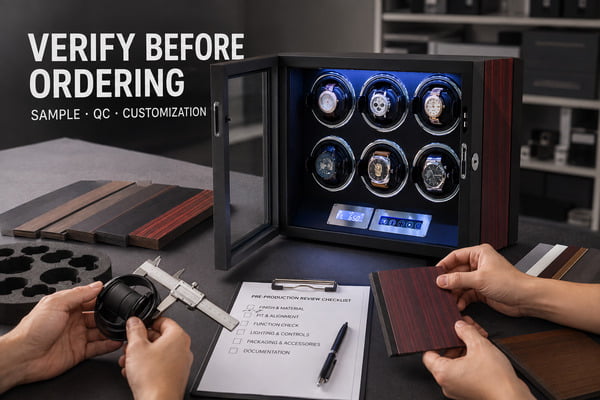
I often advise our B2B clients to compare the total project requirements rather than the unit price alone. Product inconsistencies, returns, delayed deliveries, or unclear responsibility for defects can create costs that were not visible in the initial quotation. The right balance depends on the buyer's market, quality level, volume, and risk tolerance.
Customization & Flexibility
In many markets, differentiation is important. A supplier's relevant customization capabilities should match the scope of your project.
- MOQ (Minimum Order Quantity): Can the supplier meet your volume requirements for a trial order or a larger program? At Goochy, the MOQ for eligible customized projects can start from 50 units, while the actual MOQ depends on product structure, materials, components, finish, and process requirements. Buyers seeking lower-quantity options can also review our ready-stock products, subject to final stock confirmation.
- Branding: The ability to apply approved logos, colors, and packaging details can support consistent brand presentation. The available method and result depend on the material, surface, artwork, quantity, and production process.
- Design Variations: Can the supplier adapt an existing construction or help develop a new product from the client's concept and requirements? Through our customization process, we work with clients on product development, sampling, and production assessment. Our experience includes more than 700 designs produced, which can provide references for suitable structures and processes; feasibility remains subject to project review and sample approval.
- Material and Finish Options: A capable supplier should explain the available choices in wood-based construction, exterior coverings, interior linings, and finishes—such as matte, gloss, or carbon-fiber-look surfaces—and the trade-offs relevant to the target appearance, use, and price point.
Quality Control & Certifications
Quality control and market compliance are important considerations for B2B buyers, but the requirements vary by product and destination.
- In-house QC Processes: Ask about controls for incoming materials, in-process production, and final inspection, as well as the acceptance criteria and records used for the order. Goochy uses project-specific inspection requirements and responsible personnel, which should be confirmed during order planning.
- Certifications: Identify the standards, test reports, or approvals required for the destination market and specific product configuration. CE, FCC, UL, PSE, or other marks may apply to the finished product, power adapter, motor, electronic component, or a particular model; they are not interchangeable and should be verified by scope and validity.
- Factory Audits: For larger or ongoing programs, buyers may request a factory audit or review relevant supplier documentation. The audit scope should be defined because production capability, labor practices, quality systems, and social-compliance requirements are separate areas of evaluation.
After-Sales Support & Warranty
Products can occasionally develop issues. The supplier's agreed response process is therefore an important part of project evaluation.
- Warranty: Ask about the written warranty period, coverage, exclusions, evidence required, and available remedy for the relevant model and order. Terms can vary among manufacturers, products, and markets.
- Spare Parts Availability: The availability of compatible replacement parts—such as motors or power adapters—may extend serviceability and support after-sales handling. Buyers should confirm availability, compatibility, minimum quantities, and expected supply period.
- Responsive Communication: Clear and timely communication helps manage expectations and resolve problems efficiently. At Goochy, our sales managers, including me, Cathy Xu, coordinate with clients and relevant factory teams throughout the project. You can learn more about our manufacturing background and working approach on the About Ezicase page.
Communication & Reliability
A strong working relationship depends on clear agreements and consistent performance.
- Professional Packaging: Packaging design and verification are important for reducing transit risk, particularly for electronic products and high-gloss finishes. Packaging performance depends on the product, packing method, shipment route, handling, and test criteria, so requirements should be agreed for each project.
- Timeline Adherence: Ask whether the supplier can plan against the agreed production and delivery schedule, and how material approval, sample confirmation, order changes, holidays, and logistics may affect timing. No supplier can remove every source of delay, but transparent updates support inventory planning.
- Market Insight: Relevant experience with markets such as North America, Europe, or Japan can help a supplier anticipate common specification, packaging, and compliance questions. However, the buyer remains responsible for defining target-market requirements and validating product-market fit.
By evaluating these factors alongside price, buyers can identify a watch winder manufacturer whose capabilities and working methods fit the project's requirements.
Frequently Asked Questions
Why do automatic watches need a winder?
Automatic watches are wound by the movement of the wearer's wrist and will eventually stop when left unworn after their power reserve is depleted. They do not necessarily need a winder, but a compatible winder can keep selected watches running and reduce the need to reset time, date, or certain complications. Some owners may instead prefer to let a watch stop and reset or hand-wind it before use, following the watch manufacturer's instructions.
Can a watch winder damage my watch?
A suitable, properly functioning watch winder used with settings appropriate for the movement is generally intended to operate the watch within a controlled routine. However, no universal assurance applies to every watch, particularly vintage, delicate, modified, or unusual movements. Owners should follow the watch manufacturer's guidance and stop using the winder if they observe abnormal operation, fit, noise, or timekeeping.
How many watches should a winder hold?
The appropriate capacity depends on how many compatible automatic watches the user wants to keep running, the available space, and the preferred display arrangement. Single and multi-watch winders can suit different collections. Buyers should also check holder dimensions, watch spacing, cushion fit, independent controls, and room for future additions rather than relying on slot count alone.
What is TPD and how do I find my watch's TPD?
TPD stands for Turns Per Day and describes the number of rotations programmed over a 24-hour period. Requirements vary by movement, and a commonly offered setting range should not be treated as universal. Check the watch manual, the watch or movement manufacturer's guidance, or an authorized service source for the recommended direction and operating setting.
Conclusion
Selecting a watch winder, especially for wholesale inventory, involves more than choosing an attractive case. There is no universal "best" option: suitability depends on the intended watches, movement guidance, capacity, operating programs, construction, noise, appearance, and budget. Model-specific evidence is more useful than assuming that features such as a named motor, solid wood, or anti-magnetic protection automatically indicate higher quality.
For B2B buyers, supplier selection should include relevant customization capability, defined quality controls, realistic lead times, clear compliance scope, and agreed after-sales support. At Goochy, we work with clients to evaluate these requirements and develop suitable luxury storage products through sampling and production planning. Buyers can also explore our broader range of luxury storage and collection products. To discuss a watch winder project, contact us at [email protected] or +86 13660002112.
